透過理性運算解構想像,重建布與竹之間相互臨摹的趣味,使得「布是竹、竹是布」,而在此複合空間作品《布與竹的對話》中,兩者所開啟的亦是舊記憶與新時代、紡織工業與家飾設計的交織想像。此外,更編入彈性機能、智慧科技、企業形象塑造等多重維度,使得場景不僅捕捉令人驚歎的瞬間美感體驗,更透由其獨特的設計技法,重新紡織使用者與環境的詩意關係。
Through rational algorithmic deconstruction of imagination, we reconstruct the playful mutual emulation between fabric and bamboo, giving rise to the concept that "fabric is bamboo, and bamboo is fabric." In this composite spatial work The Dialogue Between Fabric and Bamboo, the two elements also ignite an intertwined imagination of old memories and the new era, textile industry and home decor design. Furthermore, multiple dimensions such as flexible functionality, smart technology, and corporate image building are integrated, enabling the space to not only capture stunning instantaneous aesthetic experiences but also reweave the poetic relationship between users and the environment through its unique design techniques.
我們希望所有人一進到這個大廳空間,對於翩翩飛舞的緞布與其布底墊襯的竹皮產生好奇,而這也就是我們想要呈現這個企業本身所賴以生存最棒的工藝,布與竹自此,對話於空間之中,演繹了空間的張力。
We hope that upon entering this lobby space, everyone will be curious about the fluttering satin fabric and the bamboo veneer lining beneath it—this is exactly the wonderful craftsmanship on which the enterprise relies for its survival. From this moment on, fabric and bamboo engage in a dialogue within the space, interpreting its spatial tension.
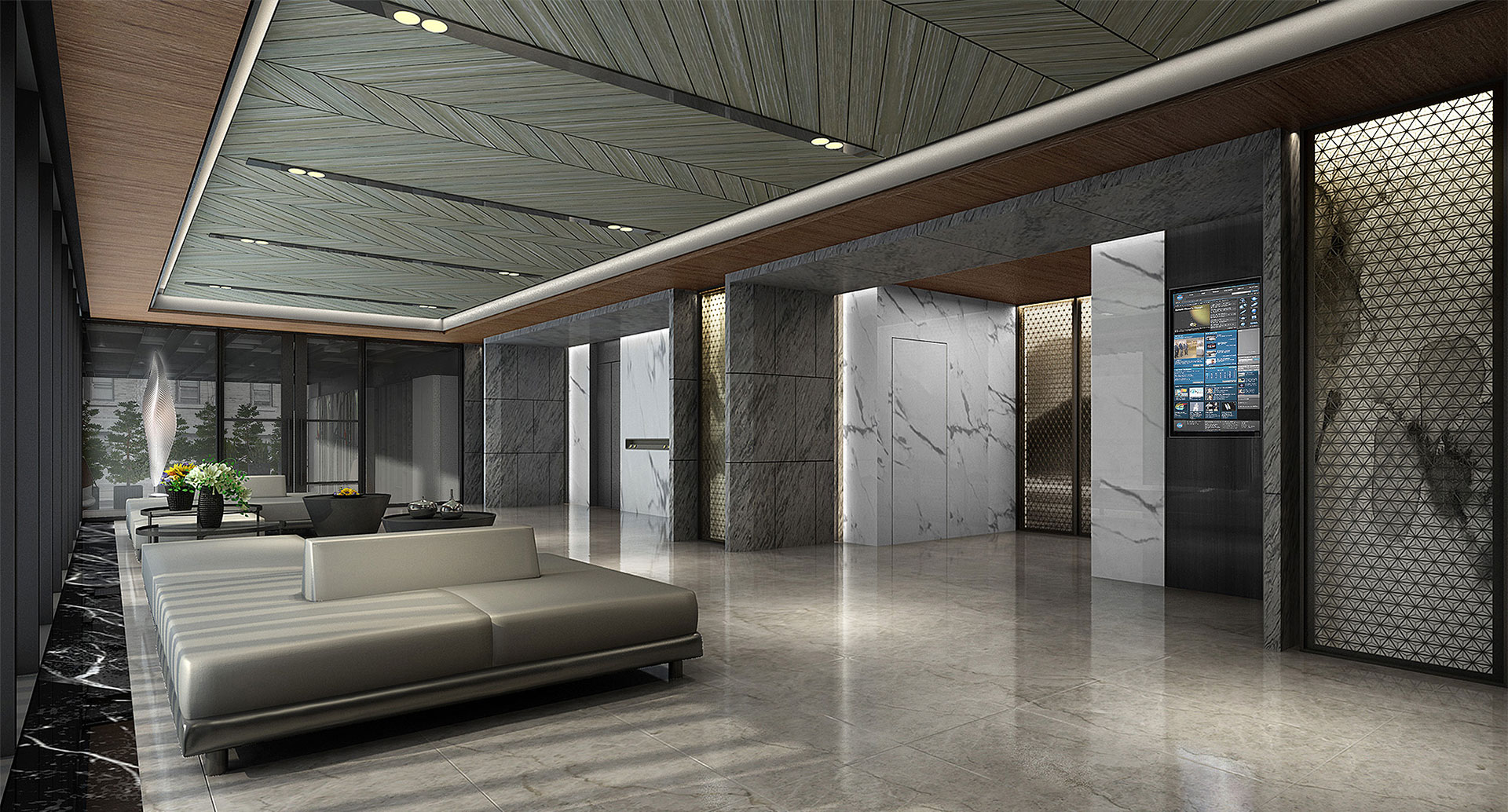
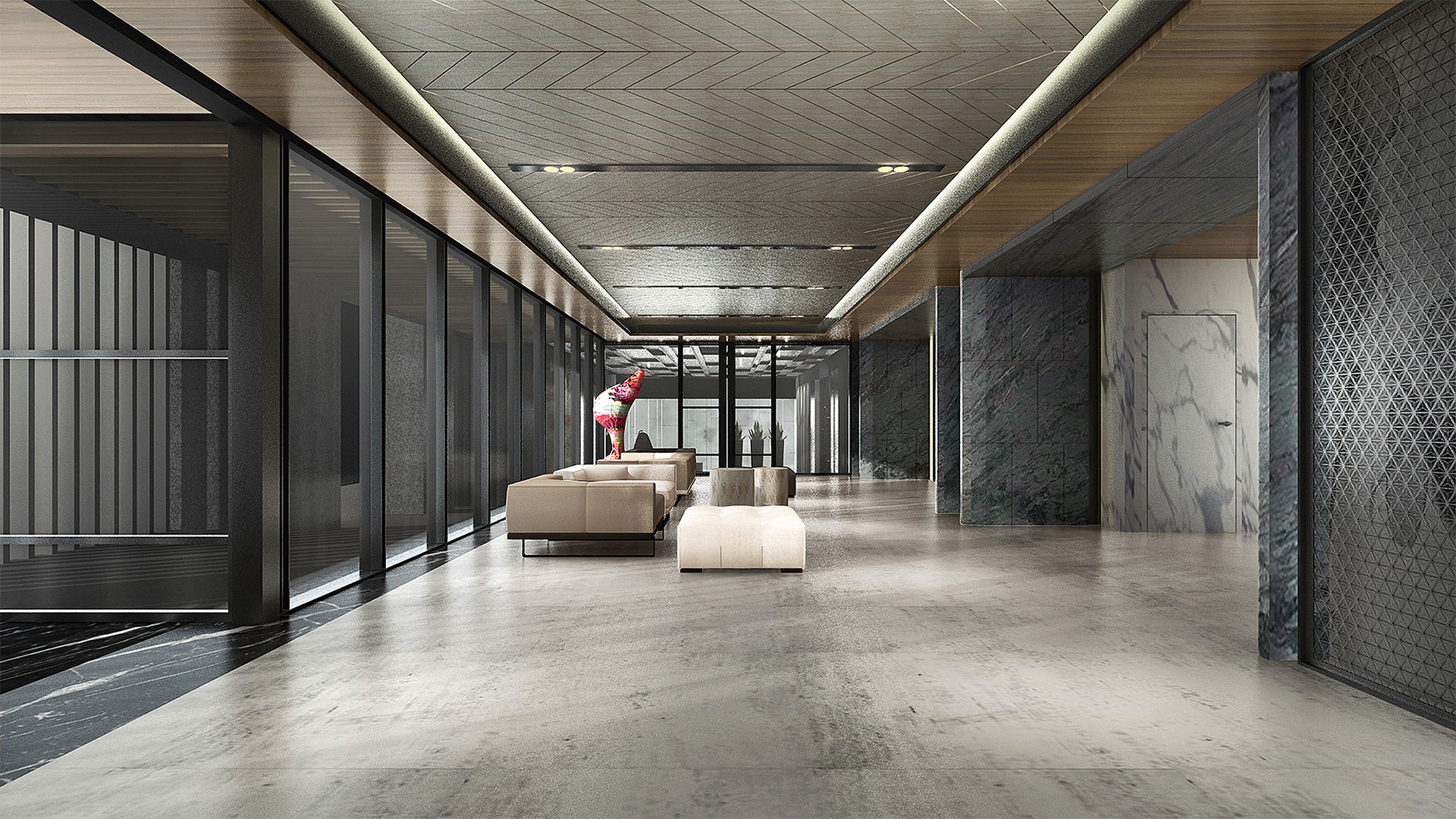
樓棟層高五樓,一樓展間、二樓辦公室、三到五樓則是工廠區,結合紡織加工、創新行銷及展售店面,將一件產品的生產到銷售程式鏈結於同一大樓。其中接待大廳極具動態的類雕塑主牆,以竹藝仿造立體織品,不僅扣合產品的重要元素,展現優雅品牌形象,更與其他樓層的快節奏形成對比;此外亦適時搭佐鐵件、玻璃與智慧膜等元素,確保場景保持開放且調度更為靈活,使置身其中的每位觀者,自在跟隨絲縷,游走於壯闊入微的空間紋理中。至於場景的另一面,則為半開放的會議空間,居中的鋁格柵金屬板覆以智慧膜,框隔微區域感之餘,亦指出區域開闔自由的聚談性質,為迎賓待客的送往需求,提供最具彈性的機能運用。
The building has five floors: a showroom on the first floor, offices on the second, and factory areas on the third to fifth floors. Integrating textile processing, innovative marketing, and exhibition-sales stores, it links the entire product lifecycle from production to sales within a single building. The lobby features a highly dynamic sculptural main wall, where bamboo art imitates three-dimensional textiles—this not only aligns with the core elements of the products and showcases an elegant brand image but also contrasts with the fast-paced rhythm of other floors. Additionally, elements such as metal fittings, glass, and smart film are appropriately incorporated to ensure the space remains open and flexible in scheduling, allowing every visitor to freely follow the threads and wander through the grand yet intricate spatial textures. On the other side of the space lies a semi-open meeting area: a central aluminum grille metal panel covered with smart film frames a subtle sense of zoning while indicating the area’s nature as a freely configurable gathering space, providing the most flexible functional application for receiving guests and business interactions.
一樓展示中心,需具有企業形象的門面,我們以一條布翻飛的定格凝態作為類雕塑的主牆,以電子運算出千根細竹序列成排,凹與凸、拉出弧形躍動線條,立體化各角度的視覺感,並在竹子的正立面塗上白漆,以輕盈化量體,緩緩湧現布的質感,一如風動裙飛的姿態,軟變硬,賦予材質動態化,以回應竹編與木作兩種材質的相容創意。
As the gateway to the corporate image, the first-floor exhibition center features a sculptural main wall inspired by the frozen moment of a fluttering piece of fabric. Through electronic algorithms, thousands of thin bamboo strips are arranged in sequences—with concavities and convexities creating arcing, dynamic lines that enhance the three-dimensional visual experience from all angles. The front faces of the bamboo strips are painted white to lighten the volume and gradually evoke the texture of fabric, resembling the posture of a skirt dancing in the wind. Softness transforms into hardness, endowing the material with dynamism to reflect the compatible creativity of bamboo weaving and woodworking.
大廳兼具演講廳與展示廳的功能;展示區的中央島區、壁掛式展示孔架牆板,可拆可移,以創造空間變動性。正對展示區的階梯前,也是造型主牆另一側,用折門做為區隔兩端空間的弱界定。右側為半開放式的會議空間,以鐵件玻璃(上覆智能膜)框起微區域感,指示此區為開闔自由的聚談空間,將做為展示場域的商業往來需求,做最大彈性的機動運用。
The lobby serves dual functions as a lecture hall and exhibition space. The central island and wall-mounted perforated display panels in the exhibition area are detachable and movable to create spatial variability. In front of the staircase facing the exhibition area—on the other side of the sculptural main wall—folding doors act as a subtle boundary separating the two spaces. To the right is the semi-open meeting area, framed by metal and glass (covered with smart film) to form a subtle zone, indicating it as a freely configurable gathering space that meets the flexible operational needs of business interactions in the exhibition venue.
收合折疊門片所形塑的弱分界,原先霧面玻璃吸收的自然光線瞬間湧流,隨著石英磚逐步抬升,樓梯轉折延續牆腳的光帶裝置,將腳步輕盈地帶向展示區域。設計師考量品牌著重以布、竹媒材為主的家飾產品,因此場域色澤保持質樸簡約。
When the folding doors are closed to form this subtle boundary, the natural light absorbed by the frosted glass suddenly surges forth. As the quartz tiles gradually rise, the light strip installation along the base of the wall continues at the staircase turning point, gently guiding footsteps toward the exhibition area. Considering that the brand focuses on home decor products primarily made of fabric and bamboo, the space maintains an understated and minimalist color palette.
另外區域分佈同樣回歸簡單,分為臨窗的島台區塊與壁掛展區;前者以回字型動線,便於隨時取用所需,充分具備會談展示之用;後者則設置滑軌落地沖孔牆,搭配可拆卸的竹制卡榫與層板,隨物件尺寸彈性遷移,打造有如立面開箱的整齊視覺,一目了然全系列產品之餘,更為陳列提供豐富的展示選擇。
In addition, the spatial layout returns to simplicity, divided into a window-side island area and a wall-mounted exhibition zone. The former features a loop circulation path for easy access to displayed items, fully serving the purpose of meeting and exhibition. The latter is equipped with floor-to-ceiling sliding perforated walls, paired with detachable bamboo tenons and shelves that can be flexibly adjusted according to the size of the items. This creates a neat visual effect similar to "unboxing a facade," allowing the entire product series to be clearly visible while providing diverse display options for the exhibits.