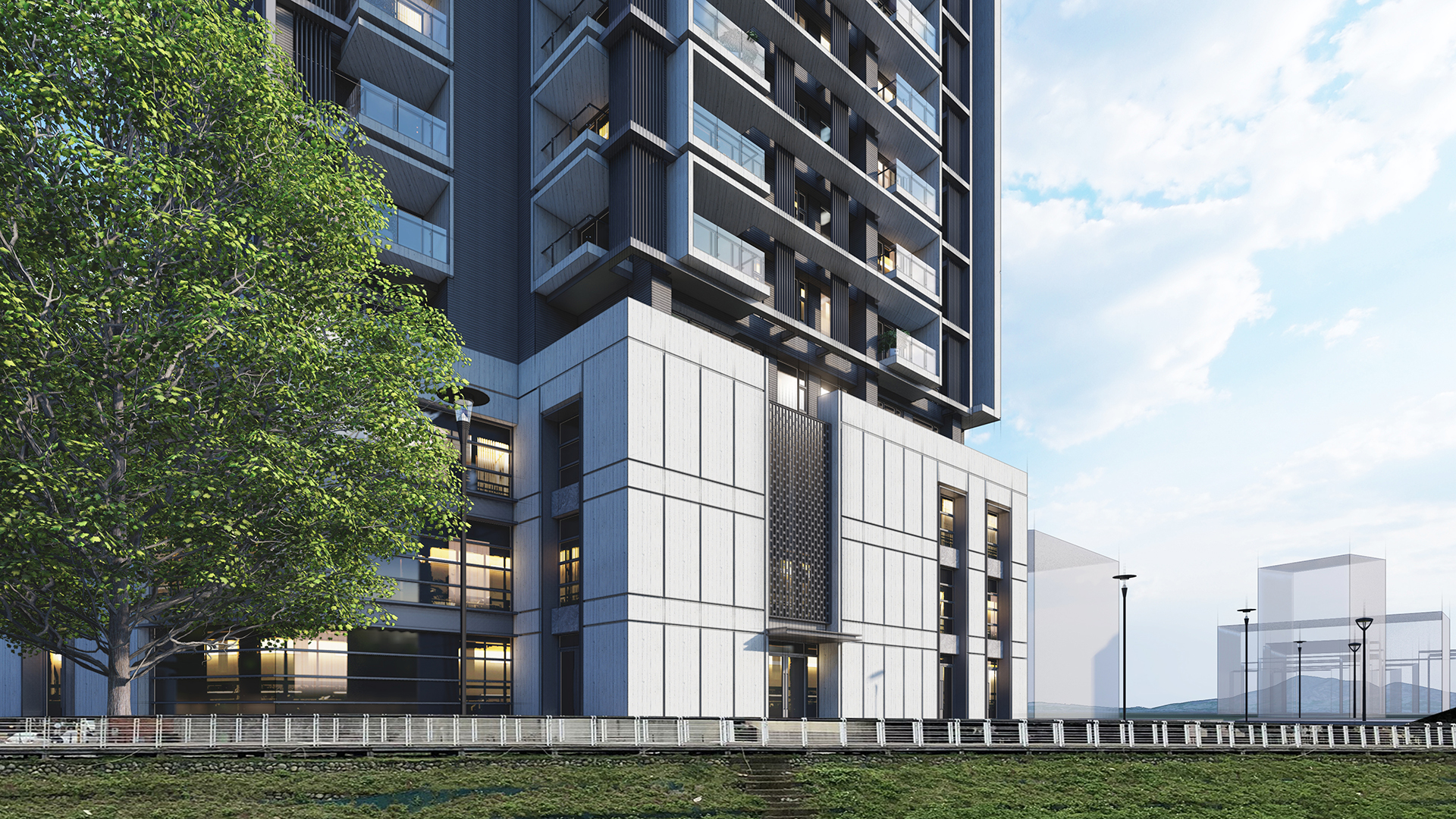
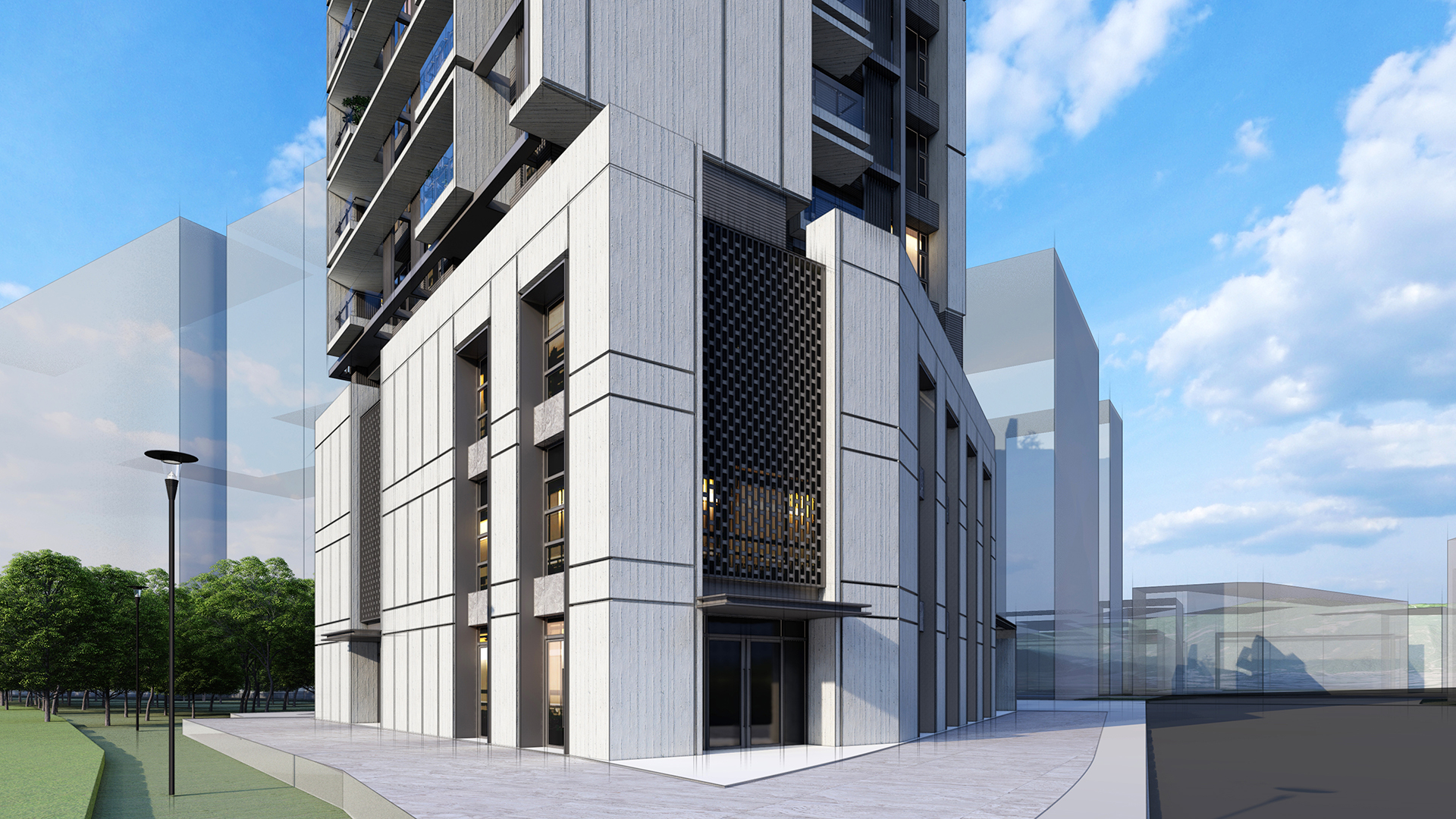
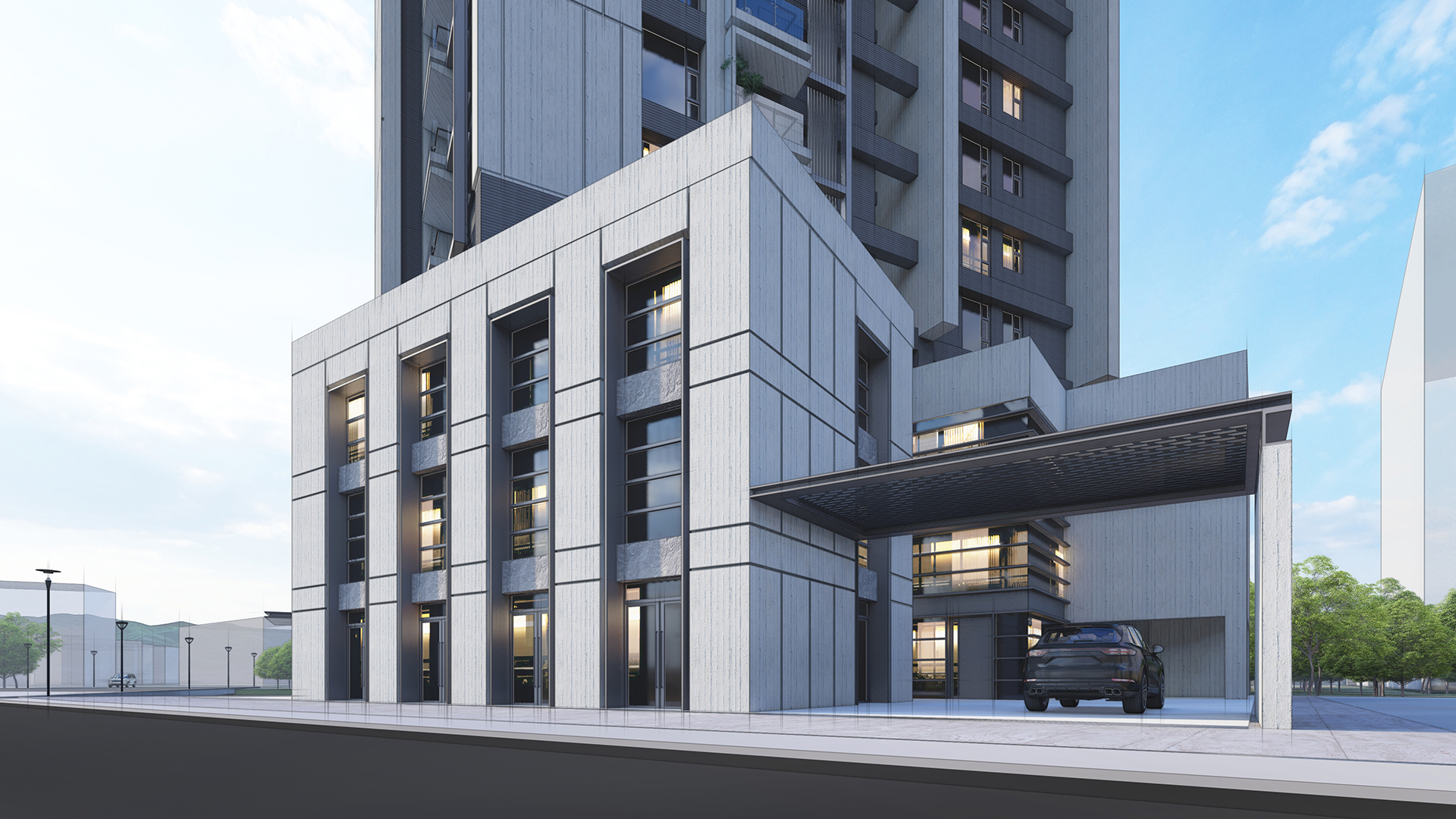
“言葉”,是心绪的表达,是人与空间对话的媒介;“庭”,是身心的归处,是建筑与自然共生的容器。
在桃园八德区的城市肌理之中,我们以 “言葉之庭” 为设计内核,跳脱传统建筑与室内设计的割裂式创作,将建筑外观与公设室内纳入统一的叙事体系,让 300㎡的空间,成为一套可被感知、可被解读、可被沉浸的 “空间语言”。
我们始终相信,好的设计无需冗余的言语赘述,空间本身即是表达。在本项目中,我们摒弃了繁复的造型堆砌与符号化的设计手法,以极简的设计语言,串联起建筑外立面的形态肌理与公设室内的场景营造,让建筑外观成为室内空间的向外延伸,让室内公设成为建筑形态的向内生长,二者互为表里,共生相融。
空间叙事
作为承载公共社交与日常休憩的核心场域,项目的公设室内设计,始终围绕 “庭” 的松弛感与 “言葉” 的共情力展开。我们在 300㎡的室内尺度中,以 “庭” 的造园逻辑,划分出流动且有序的功能场景,消解了建筑墙体的边界感,让每一处转角、每一片光影、每一处材质的碰撞,都成为空间无声的 “言语”,与身处其中的人产生温柔的对话。
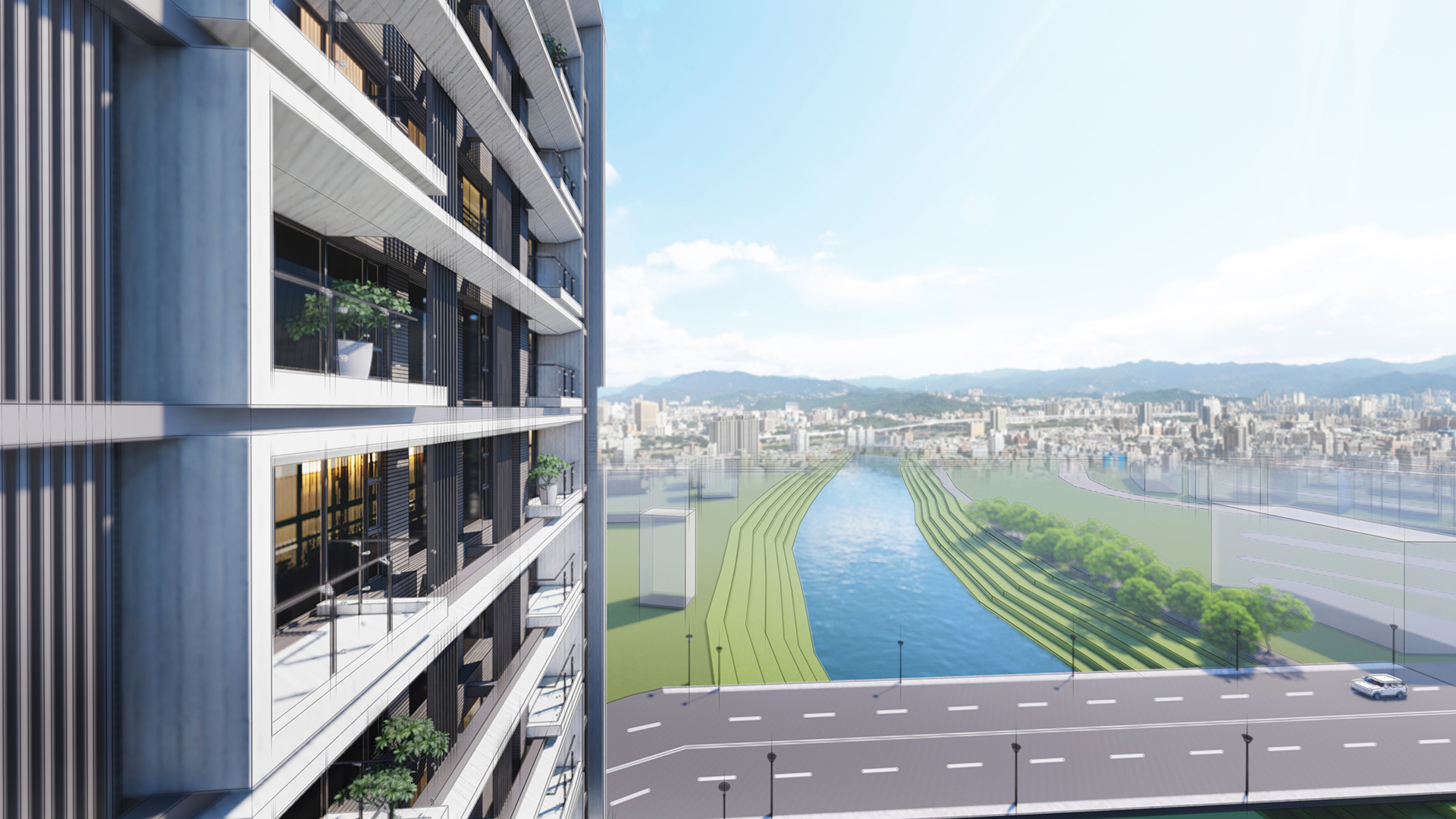
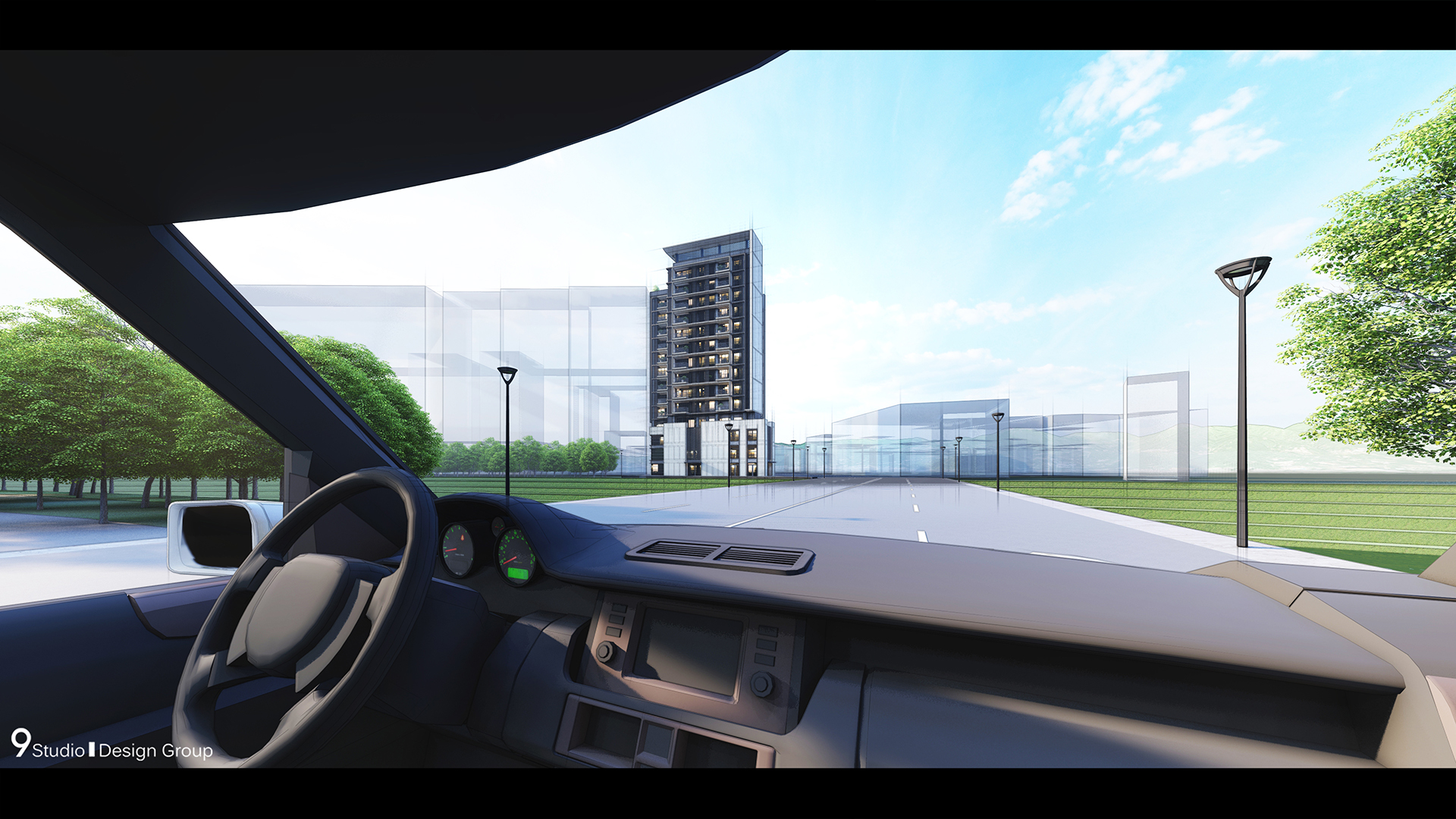
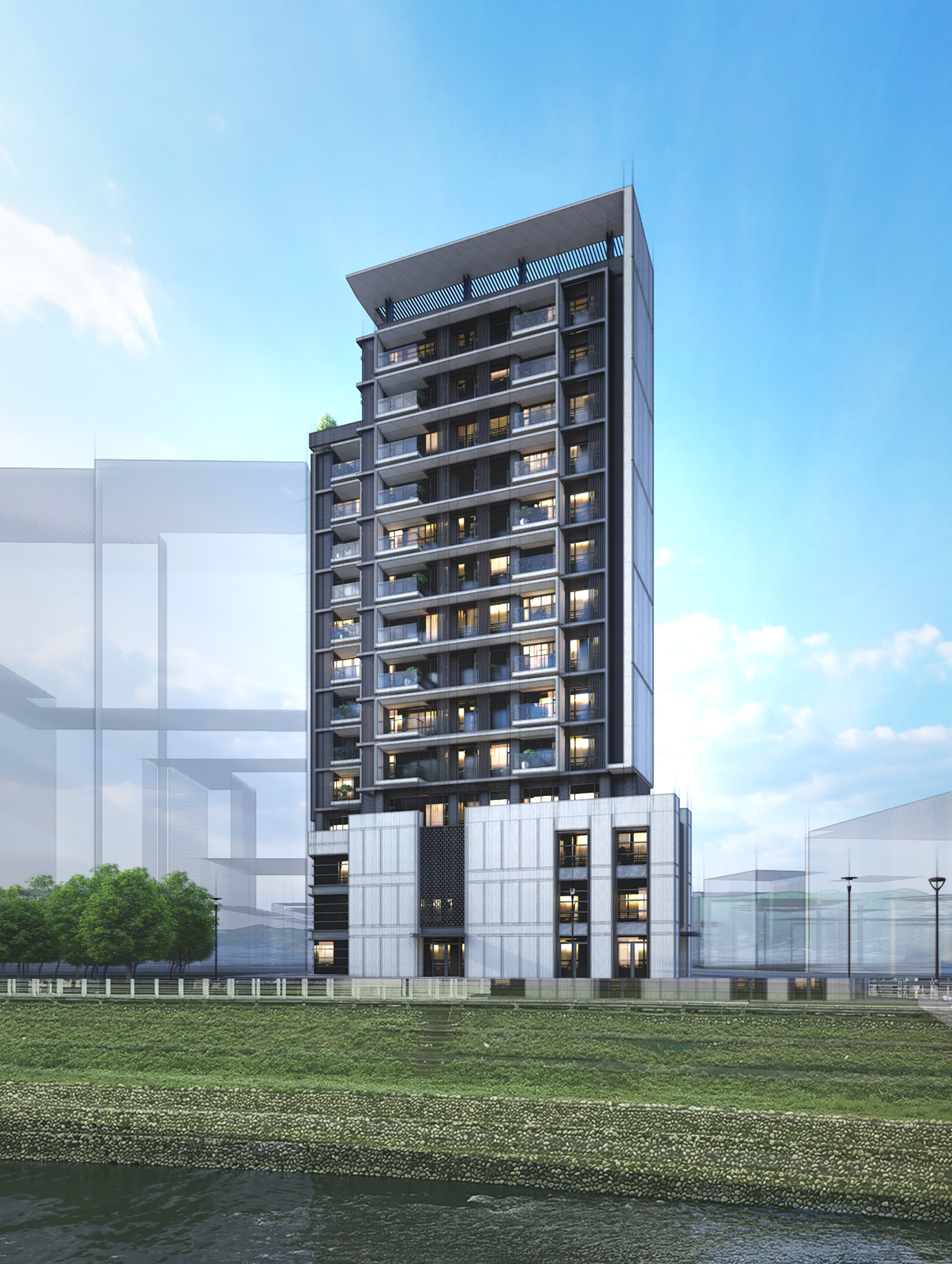
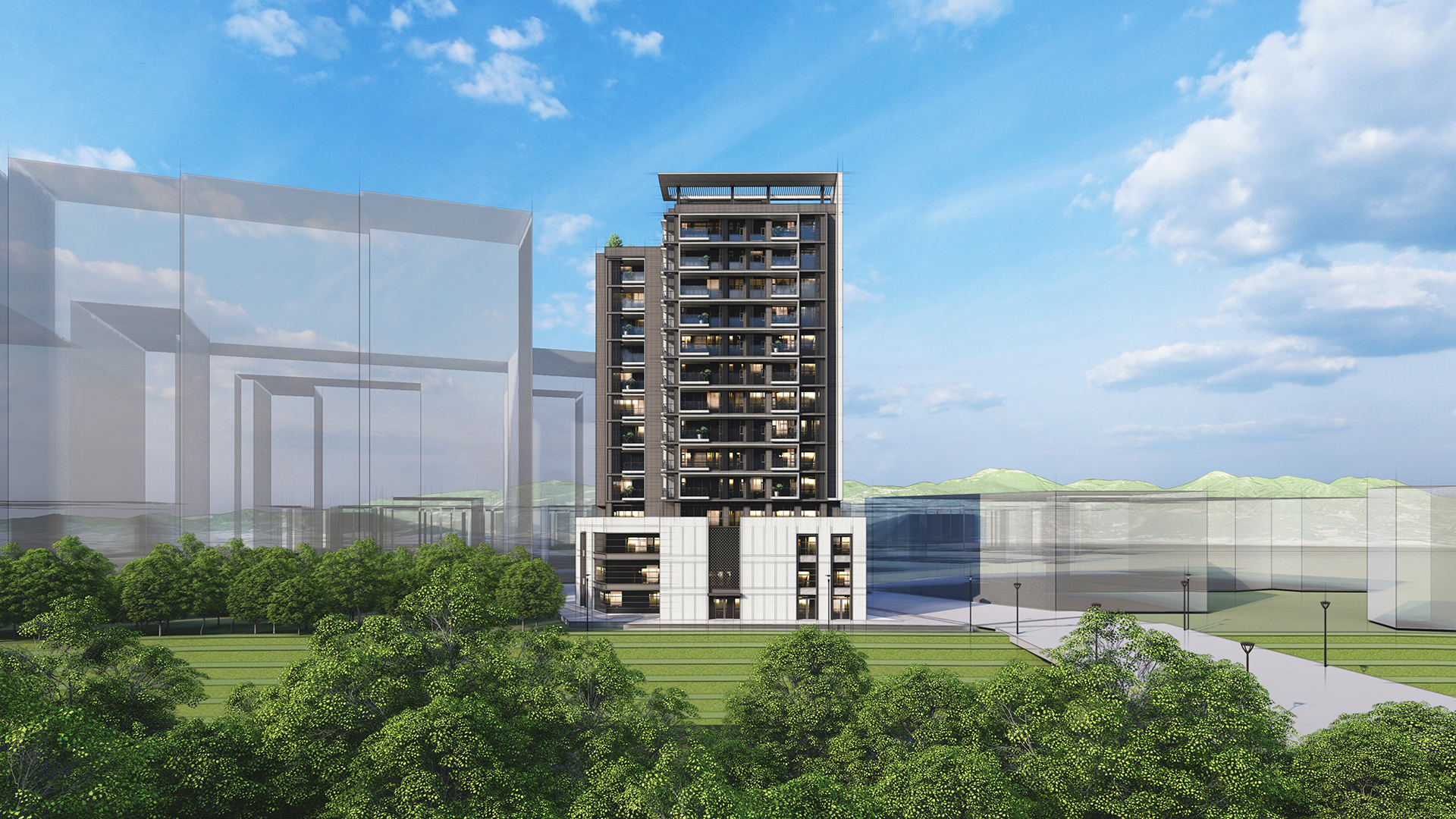
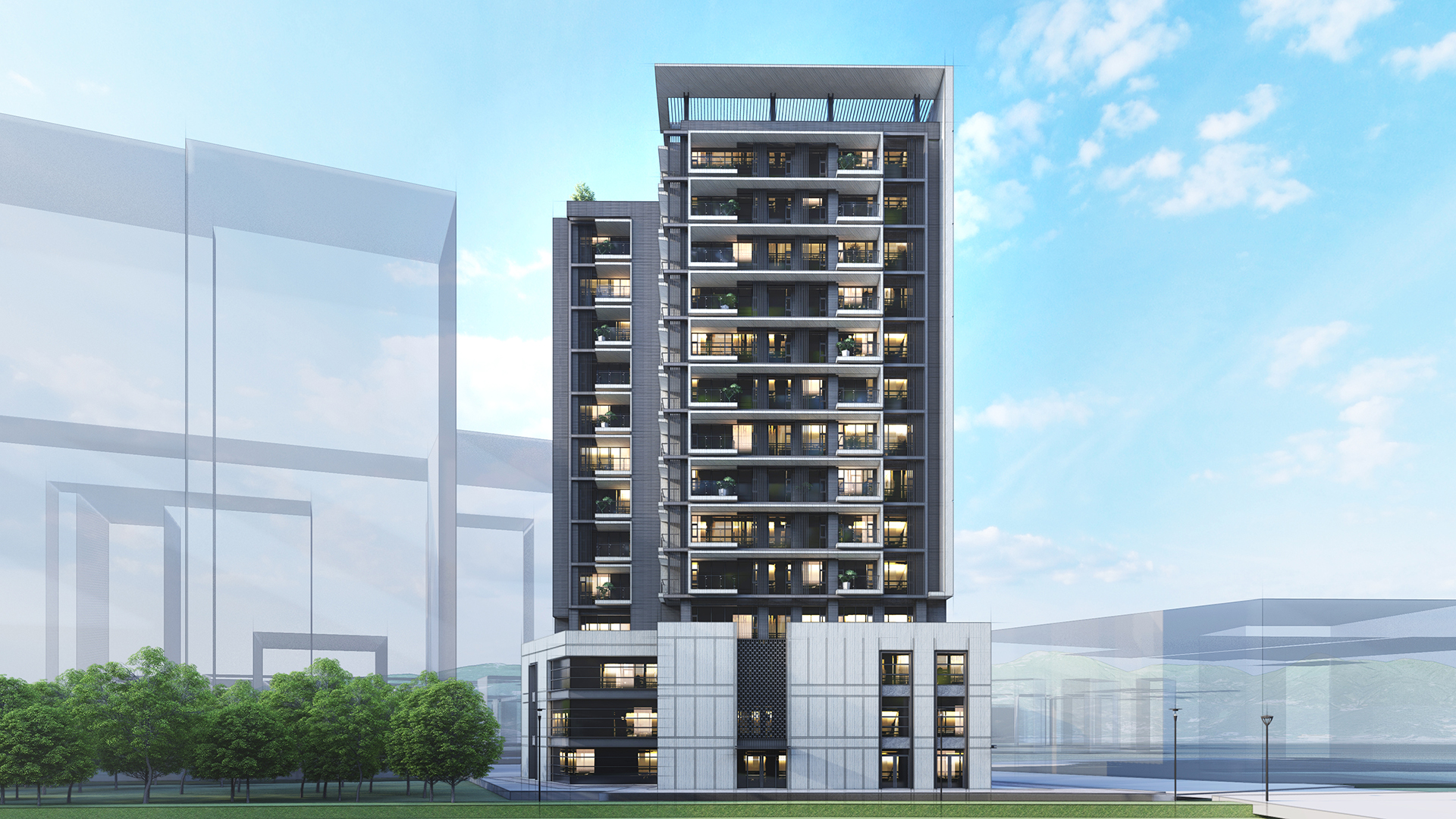
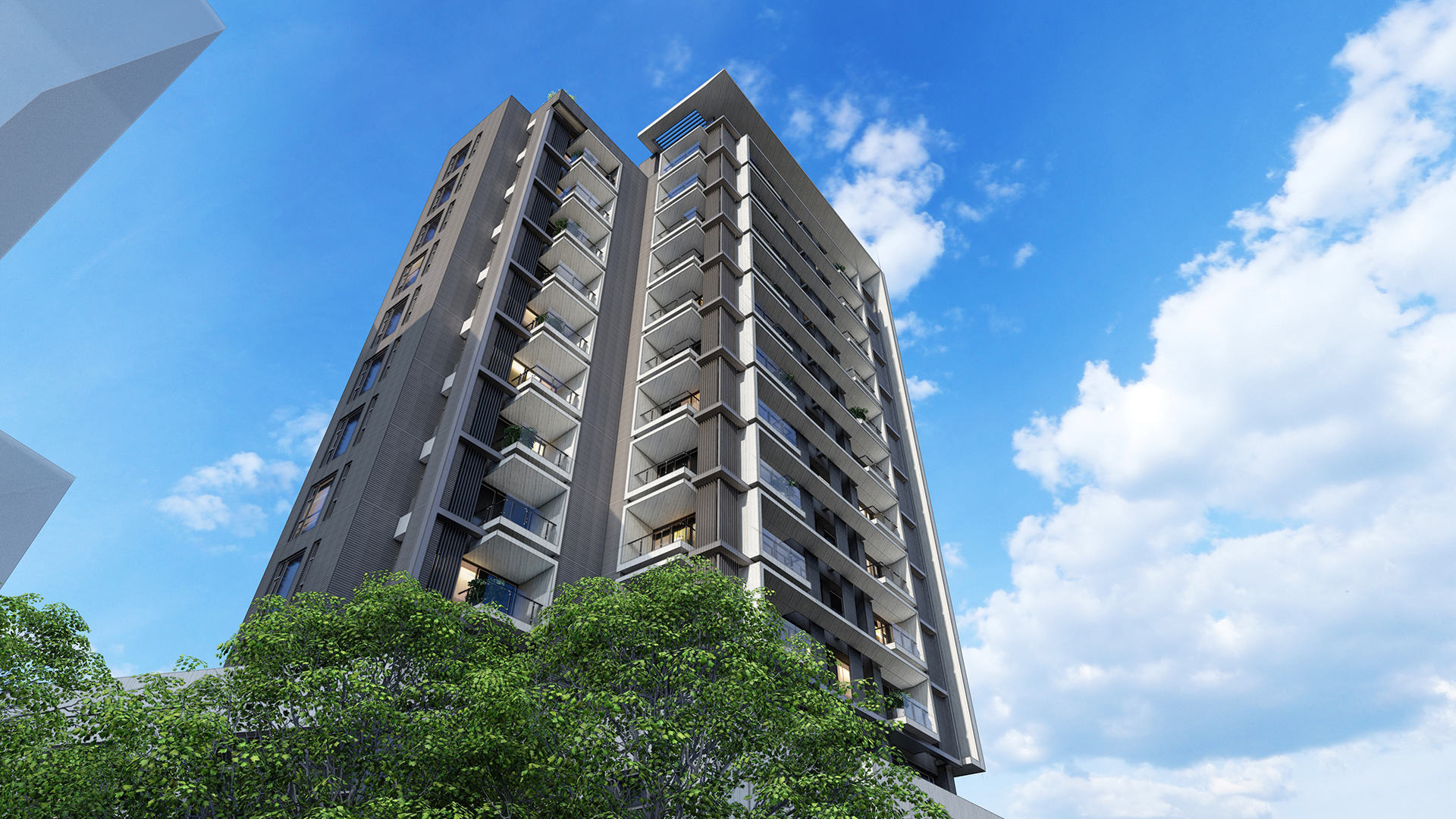
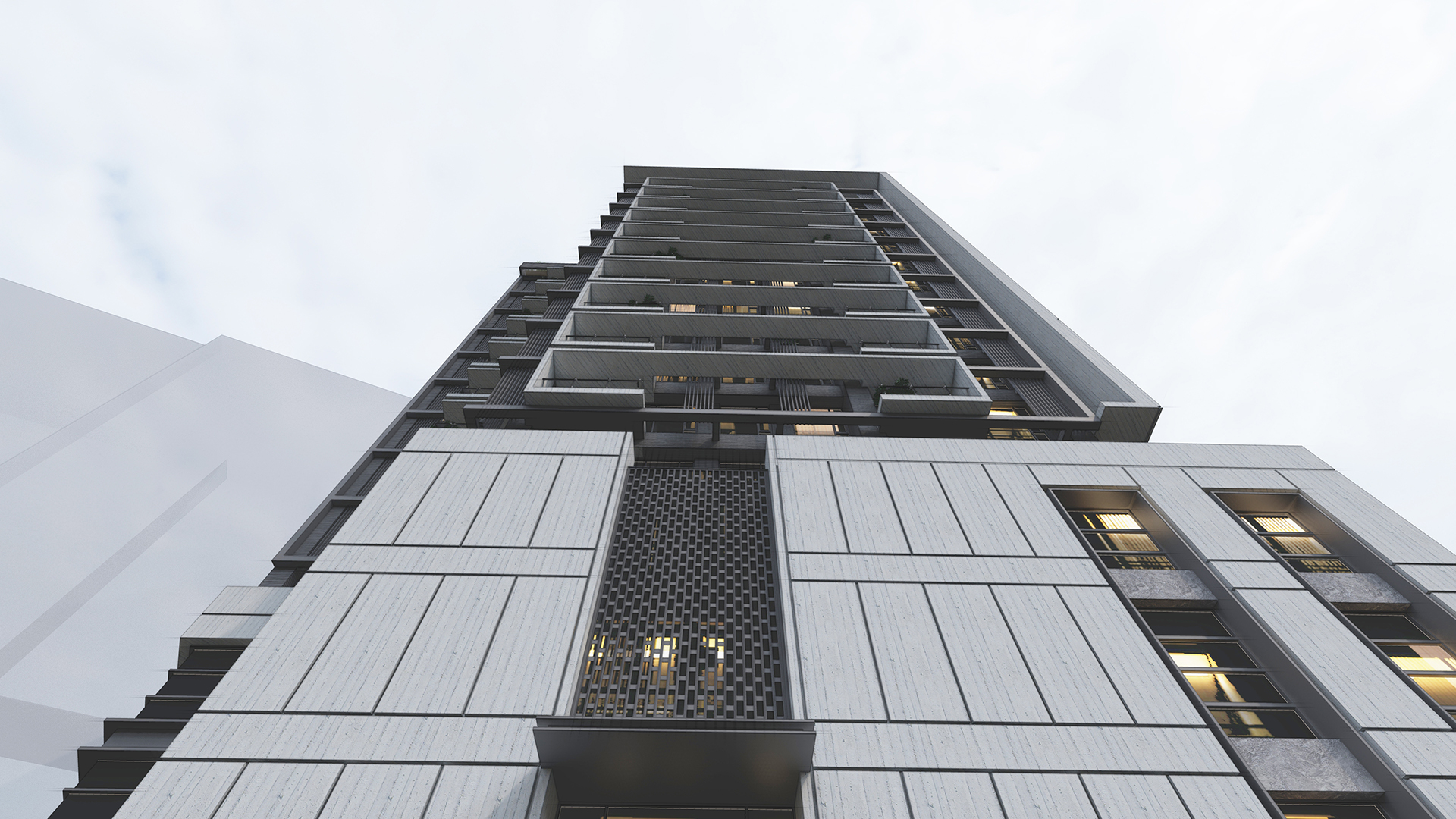
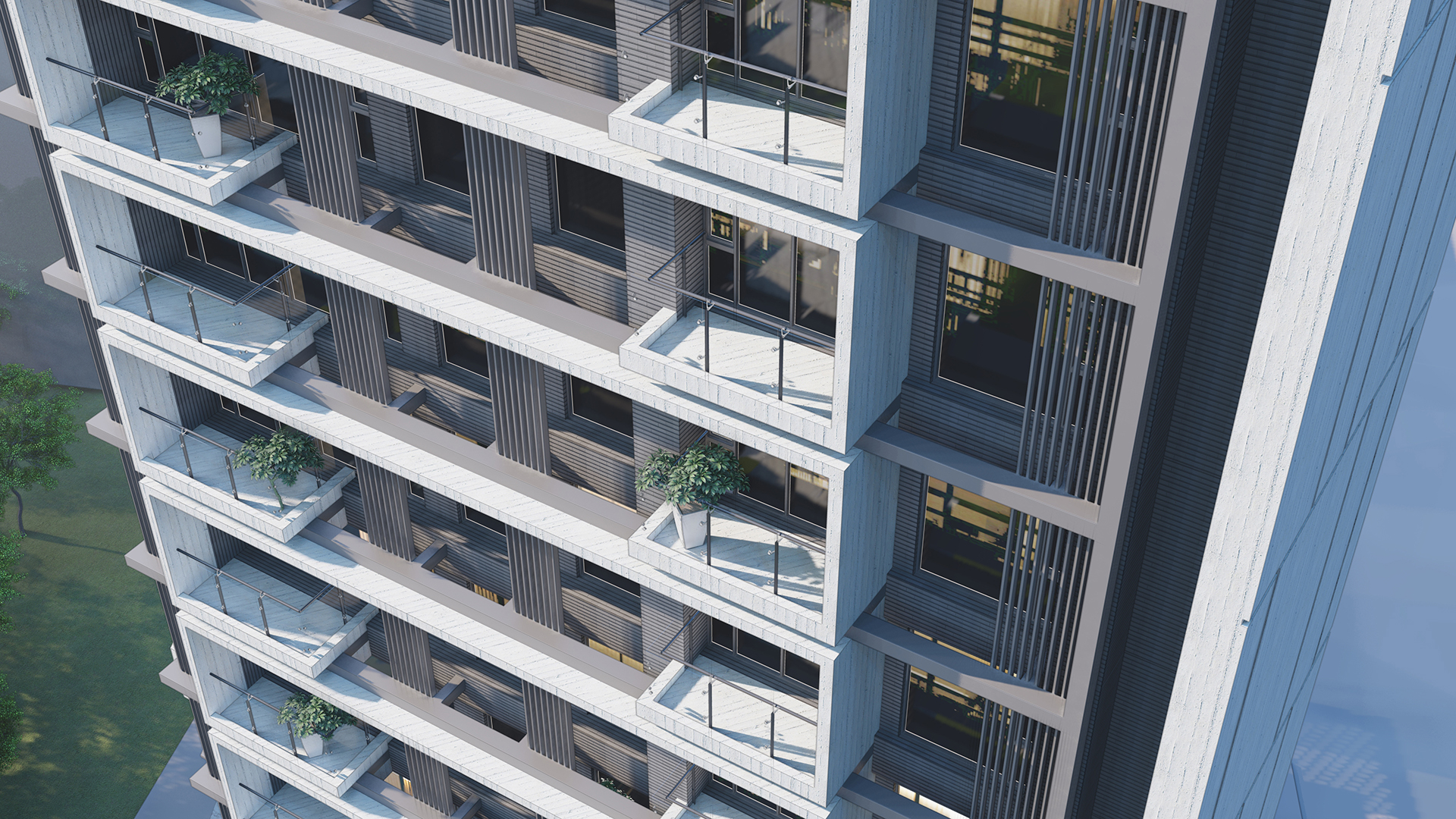
而建筑外观的设计,则以 “庭” 的整体气质为锚点,用克制的线条、自然的材质与通透的界面,呼应室内空间的叙事节奏,让建筑与周边环境形成温和的对话,既在城市语境中保有独特的辨识度,又不突兀于日常的生活氛围,最终成就一处 “以语为径,以庭为心” 的设计作品,让每一位到访者,都能在空间中,听见属于自己的内心回响。
"Kotoba (words)" is the expression of emotions, and the medium for dialogue between people and space. "Niwa (garden)" is the field for body and mind, and the container for the symbiosis of architecture and nature.
In the urban fabric of Bade District, Taoyuan, we take "The Garden of Words" as the core of our design, breaking away from the fragmented creation of traditional architecture and interior design. We integrate the building facade and public interior into a unified narrative system, making the 300 ㎡ space a set of "spatial language" that can be perceived, interpreted and immersed in.
We always believe that excellent design needs no redundant verbal description, and the space itself is the expression. In this project, we abandon the complicated shape stacking and symbolic design techniques, and use the minimalist design language to connect the form and texture of the building facade with the scene creation of the public interior. We make the building facade the outward extension of the interior space, and the public interior the inward growth of the architectural form, with the two complementing each other and integrating in symbiosis.
Space Narrative
As the core field carrying public social interaction and daily rest, the interior design of the project's public area has always been developed around the sense of relaxation of the "garden" and the empathy of "words". In the 300 ㎡ interior scale, we use the gardening logic of the "garden" to divide the flowing and orderly functional scenes, dispelling the boundary sense of the building walls. Every corner, every piece of light and shadow, and every collision of materials becomes the silent "words" of the space, having a gentle dialogue with the people in it.
The design of the building facade takes the overall temperament of the "garden" as the anchor point, and uses restrained lines, natural materials and transparent interfaces to echo the narrative rhythm of the interior space. It allows the building to have a gentle dialogue with the surrounding environment, not only maintaining a unique recognition in the urban context, but also not abrupt in the daily living atmosphere. Finally, it achieves a design work of "taking words as the path and garden as the heart", allowing every visitor to hear the echo of their own heart in the space.