計畫緣起:
本項目整體建築一直處於閒置未啟動運營的狀態,長久閒置的建築漸漸地形成人煙罕至的城市負空間與管理之死角,對周邊居民的日常生活造成許多負面之城市生活體驗。2021年,經業主團隊將本項目長期承租下來,委託本團隊進行整體改造規劃,定名本項目為「VLAB 翌方181年輕力共生社區」,期待打造一時尚前衛、綠色生態、持續發展的辦公生活一體化新型共用社區,實現商業、文化、創意、趣玩、購物體驗、活力社交的多元融合。
Project Origin:
The entire building of this project had long been idle and non-operational. Over time, this abandoned structure gradually became an underutilized urban negative space and a management blind spot, exerting numerous negative impacts on the daily life experiences of surrounding residents. In 2021, the client team leased the project long-term and entrusted our team with the overall renovation and planning, naming it "VLAB Yifang 181: A Youthful Symbiotic Community." The vision is to create a fashionable, avant-garde, eco-friendly, and sustainable new shared community integrating work and life—realizing the multi-dimensional integration of business, culture, creativity, entertainment, shopping experiences, and dynamic social interaction.
設計說明 Design Description:
城市居民生活動線:
項目企圖在都市中創造一全新生活的活動節點,透過規劃,改變城市人行動線匯集至本項目,形塑一開放式之城市客廳空間型態。項目在設計初期即設定了未來主要的招商板塊,其中包括辦公、餐飲、運動、文創、娛樂、社交、藝術與購物等各類型活動屬性空間,雖然屬性不同,卻都是城市生活所必需的各種剛需要素,我們期待的不只是扮演一個城市客廳的角色,我們更期待城市居民在此體現辦公即是生活的工作模式,在此分享生活,體驗藝術,它是城市客廳,更是一座城市舞台,期待藉由本項目豐富起居民的各式活動在此深度發芽與展現。
除了扮演居民生活交流的重要場域與載體外,設計更期待本項目未來扮演城市烏托邦,創業者的天堂之角色,人們在此創業,透過本項目的線上線下載體,找到更多的發展資源與同好,藉由一場場的活動與分享,在此匯聚,共同攜手成長。
Urban Residents’ Living Circulation:
The project aims to create a new lifestyle hub in the city. Through thoughtful planning, it redirects urban pedestrian flows to converge here, forming an open "urban living room" spatial form. During the initial design phase, the project defined key investment promotion sectors, including office spaces, catering, sports, cultural and creative industries, entertainment, social venues, art spaces, and shopping areas. Though diverse in nature, these sectors address essential daily needs of urban life. Beyond functioning as an urban living room, we aspire to enable residents to embrace a "work-as-life" model—sharing life experiences, engaging with art, and participating in various activities. It is not merely a living room for the city, but also an urban stage where residents’ diverse lifestyles can take root and flourish.
In addition to serving as a core venue for residents’ daily interactions, the design envisions the project as an "urban utopia" and a paradise for entrepreneurs. Here, innovators can leverage both online and offline platforms to access resources and connect with like-minded individuals. Through a series of events and knowledge-sharing sessions, people gather to grow and collaborate collectively.
開放式建築立面設計:
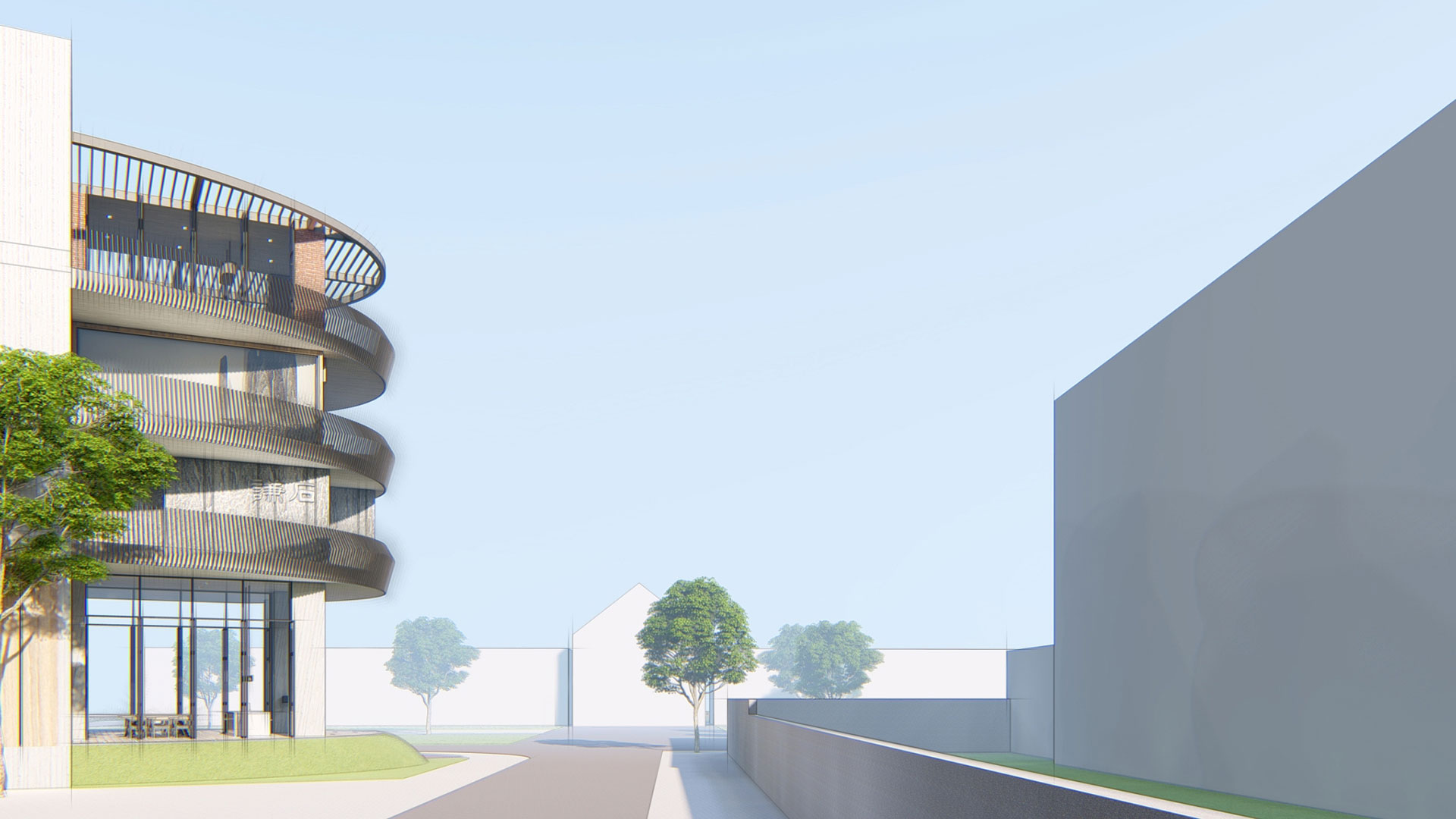
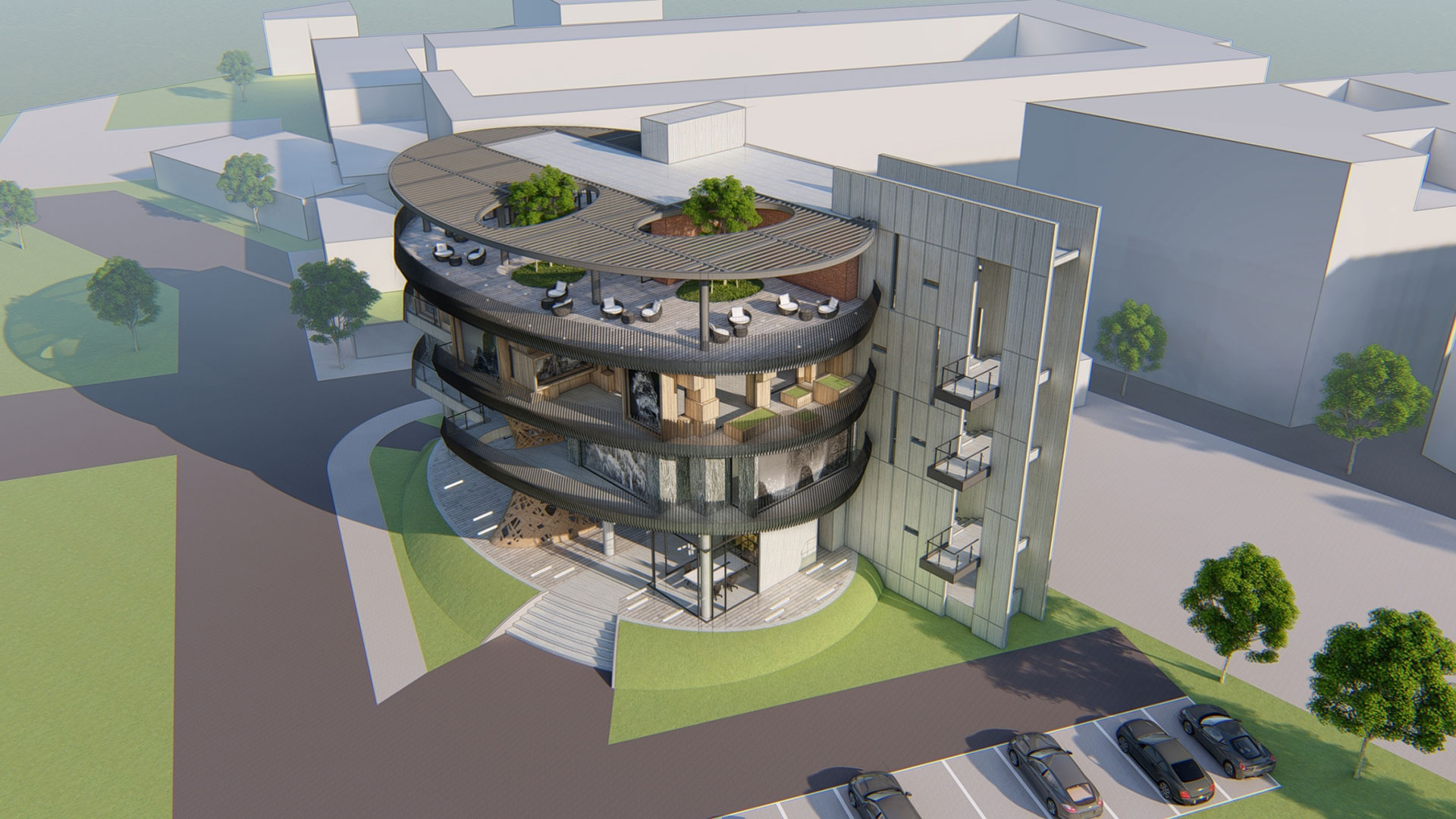
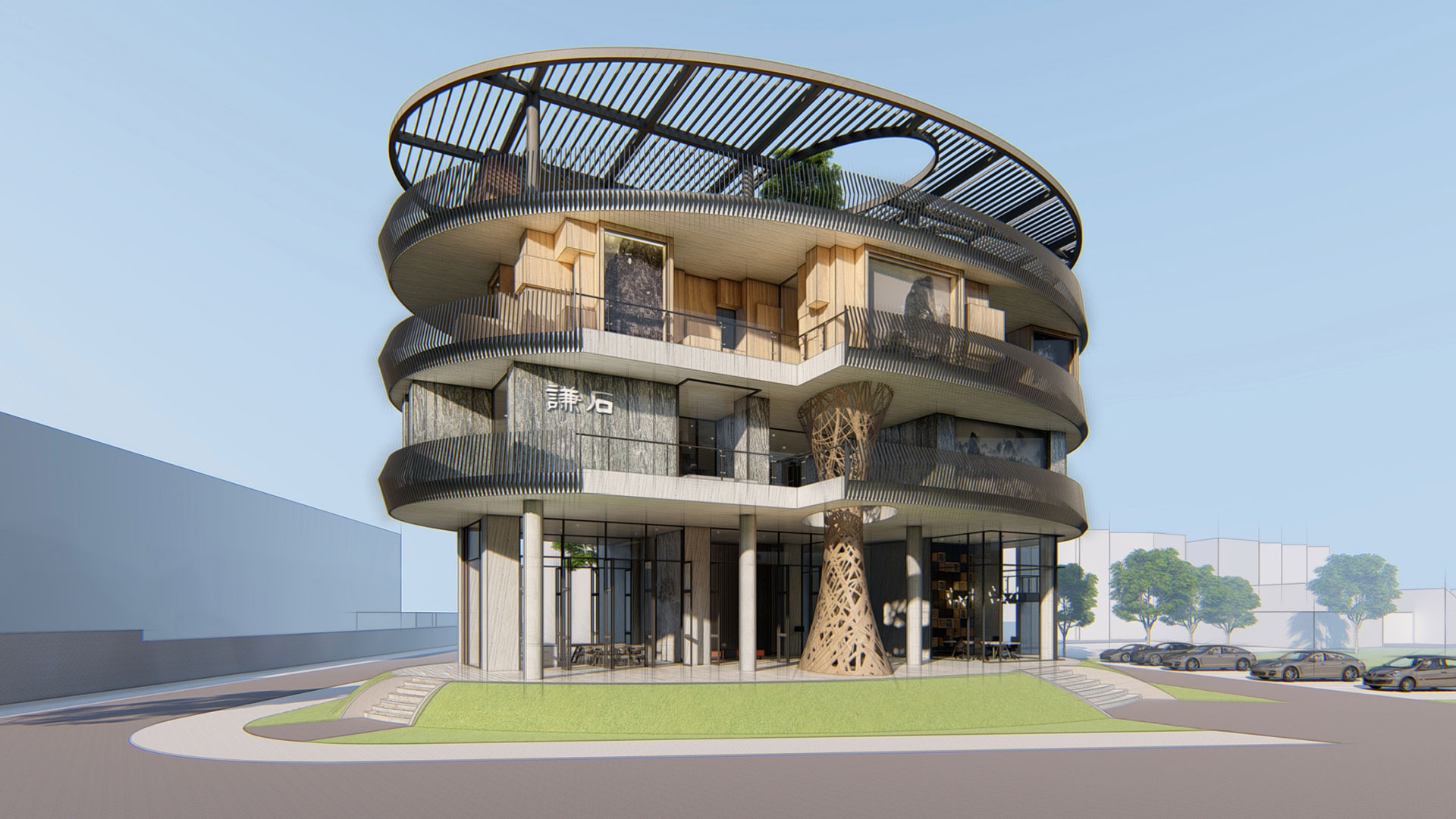
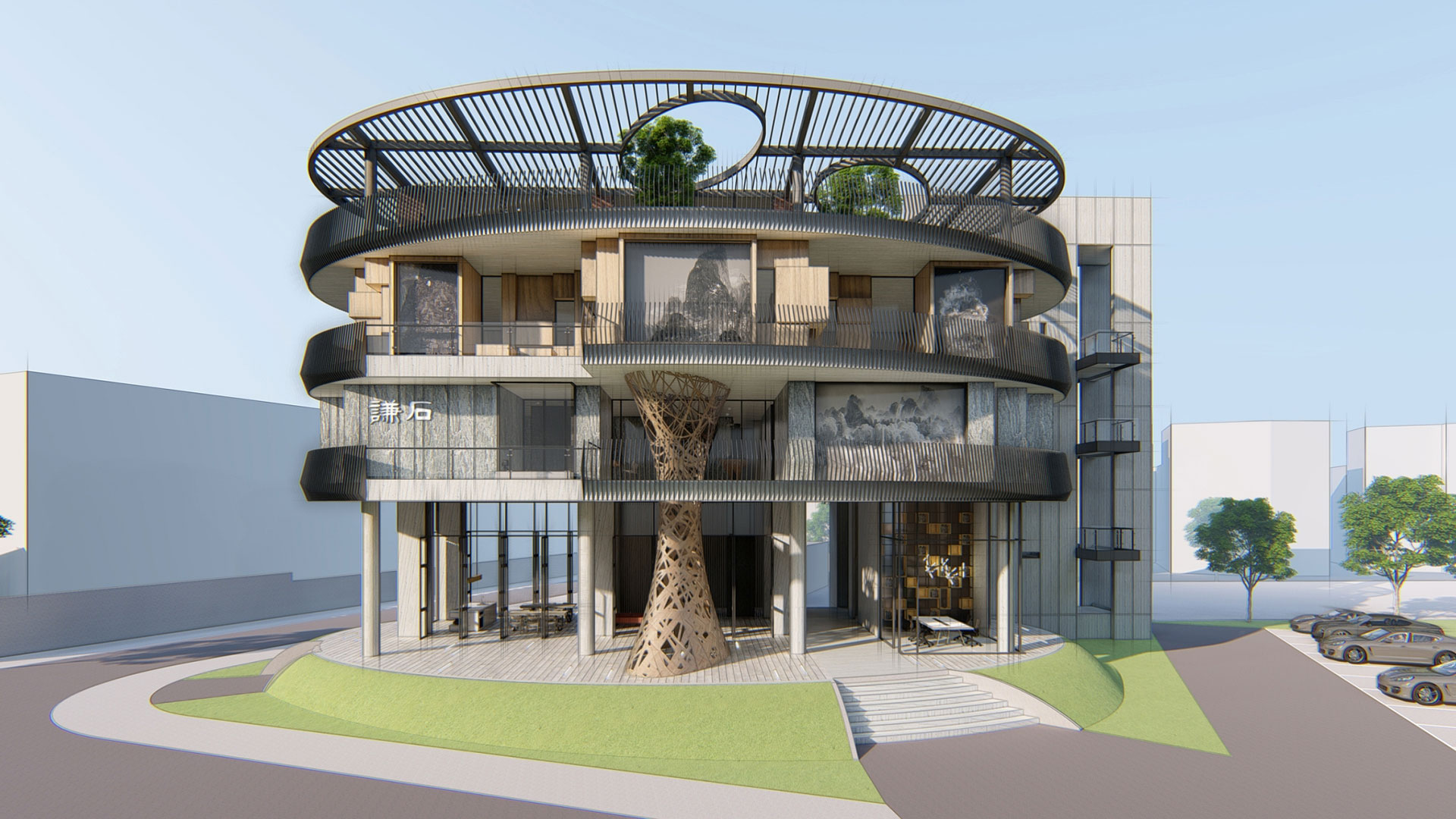
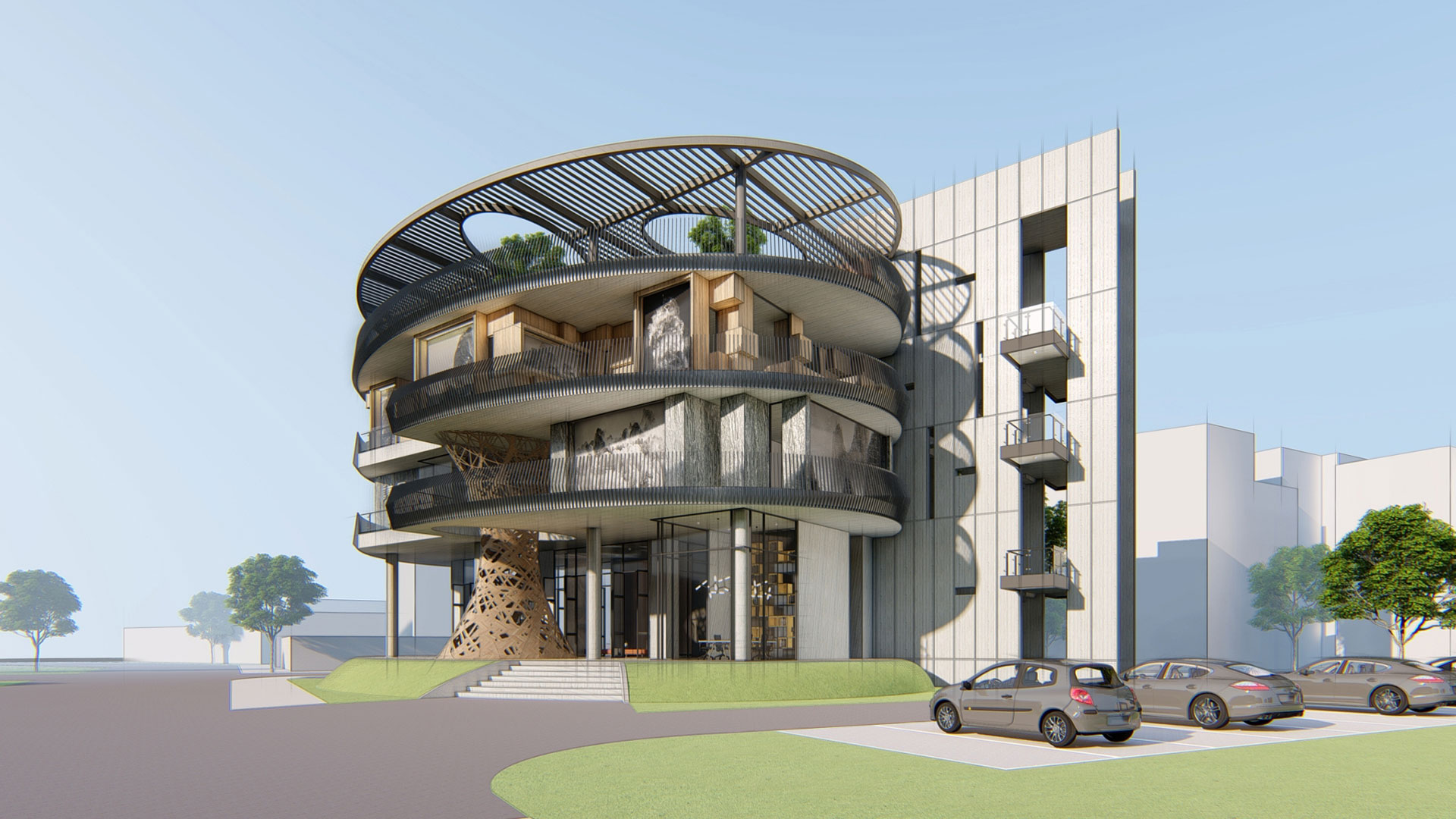
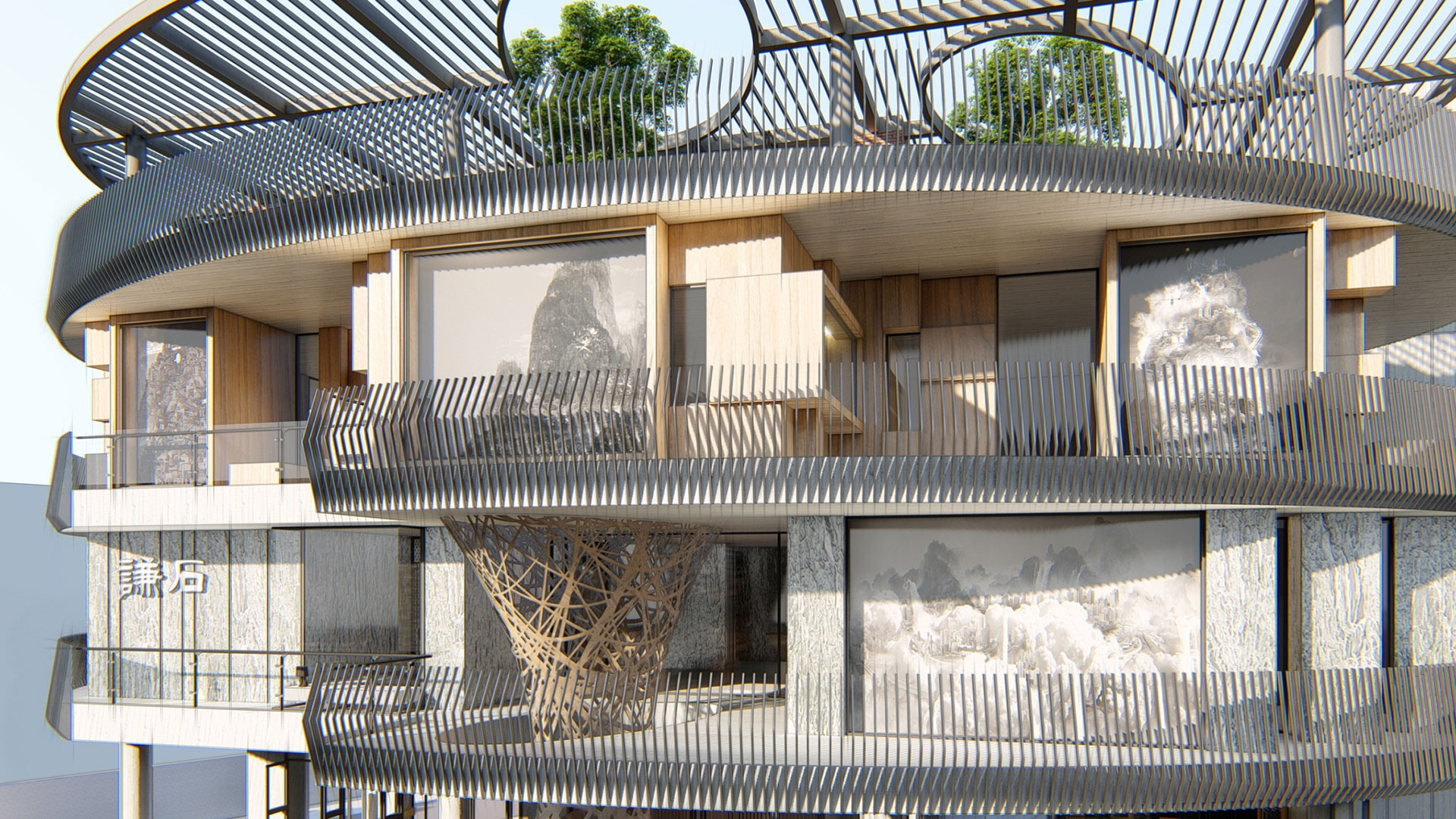
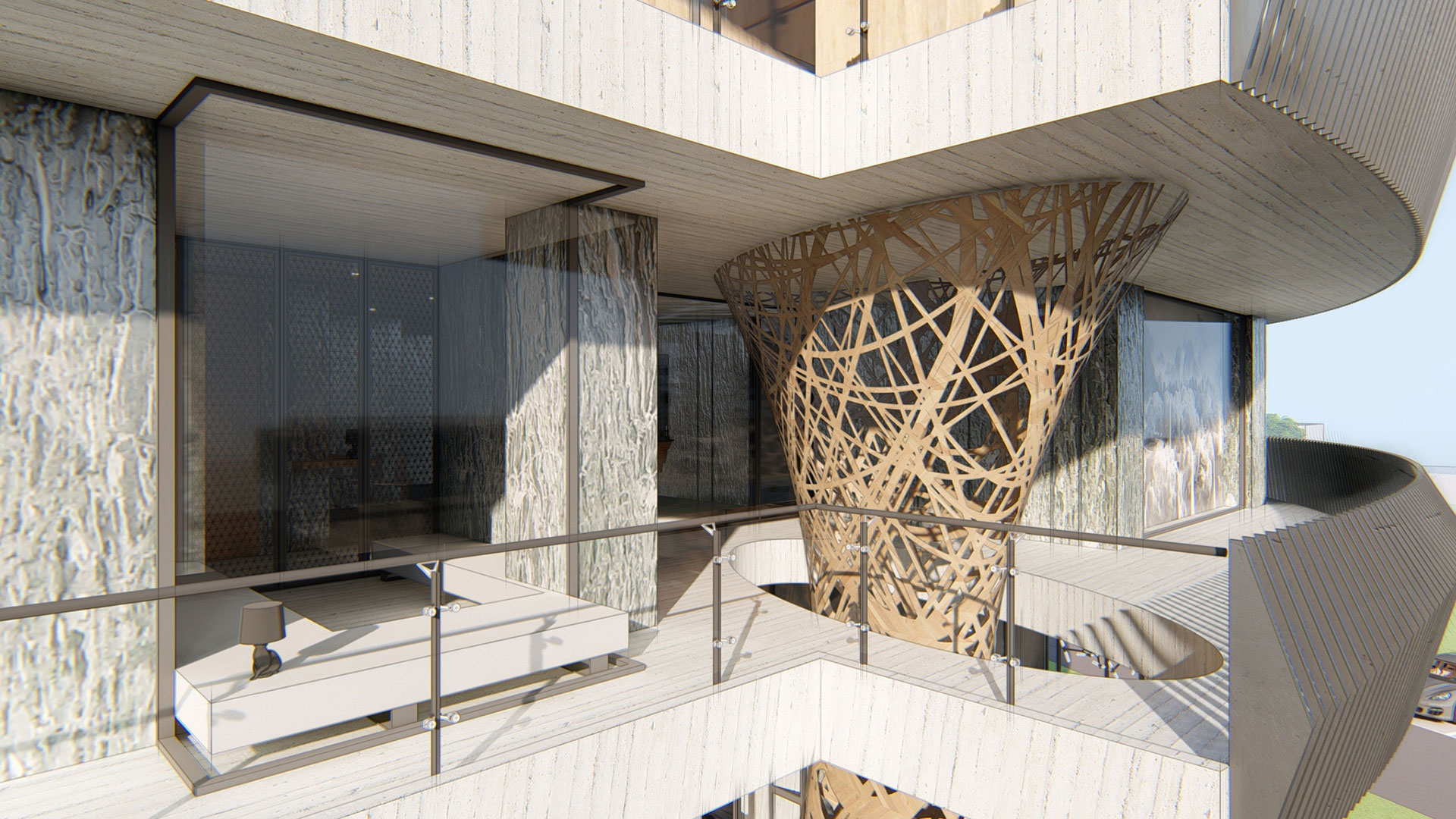
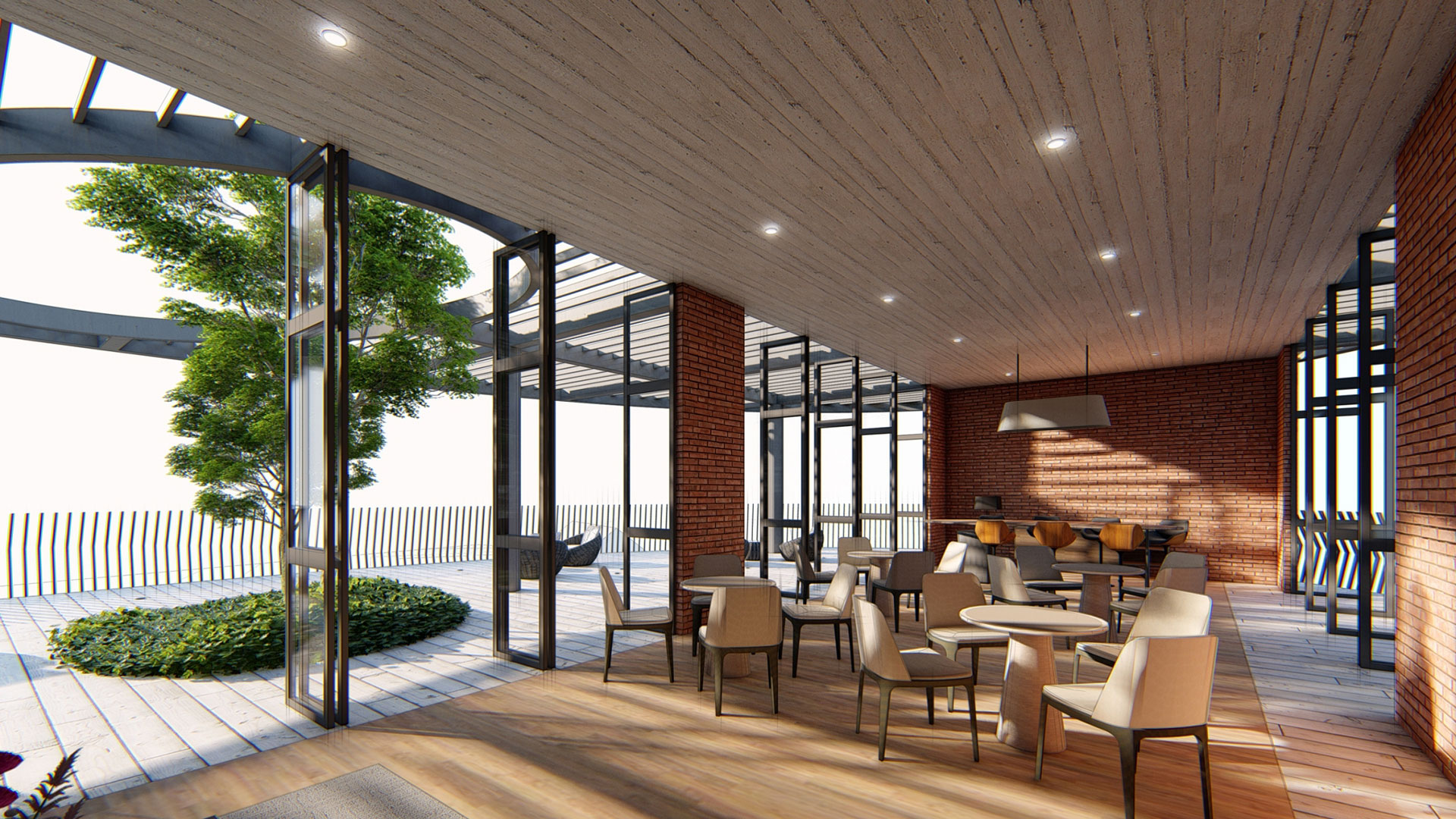
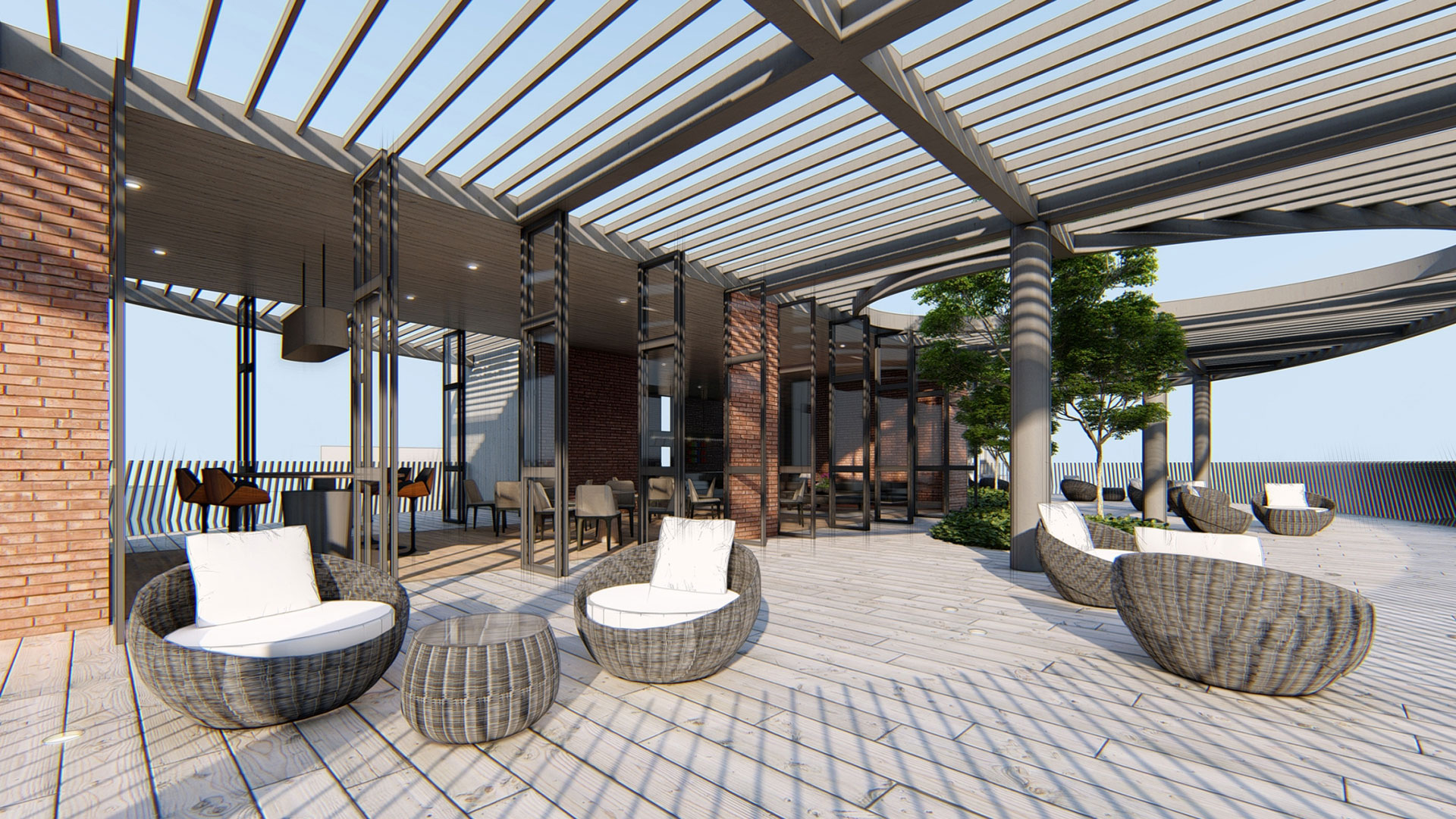
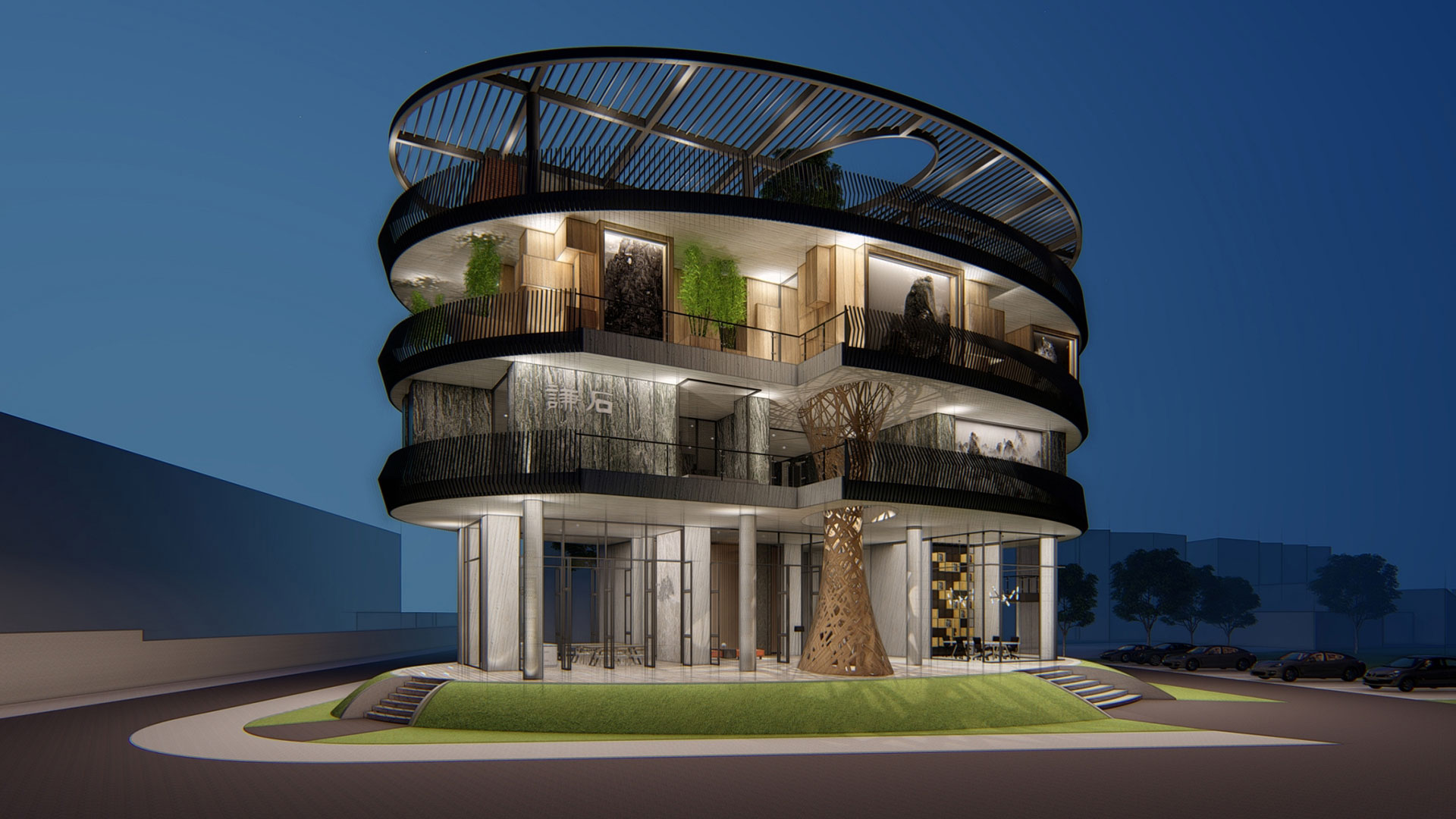
設計前,原建築大量使用石材與玻璃帷幕,企圖打造一高大上之立面質感,但本作品未來所應展現的是更活潑與年輕的立面表情,更重要的是,設計期待打破原本室內與戶外直接透過一片窗隔斷的空間模式,在室內與戶外之間應能加入一陽台的元素,讓人可以從室內走到陽台停留並與戶外的自然環境產生互動,同時,我們在看本建築時亦不再是原本冰冷的建築立面表情,更多的是能站在一樓與樓上各層陽台停留的人互動,建築只是個載具,它乘載的是人與人,人與自然之互動關係。
Open Architectural Facade Design
Prior to renovation, the original building extensively used stone and glass curtain walls, attempting to create a luxurious facade texture. However, this project intends to showcase a more vibrant and youthful architectural expression. More importantly, the design seeks to break the traditional spatial pattern where a single window separates indoor and outdoor spaces. Instead, a balcony element is integrated between the interior and exterior, allowing people to step out from indoors to the balcony, linger, and interact with the natural environment. Additionally, the building is no longer perceived as a cold, impersonal facade—instead, it fosters interactions between people standing on the first floor and those on balconies of upper floors. Architecture serves as a carrier, facilitating connections between people and between humans and nature.
開放式園區設計:
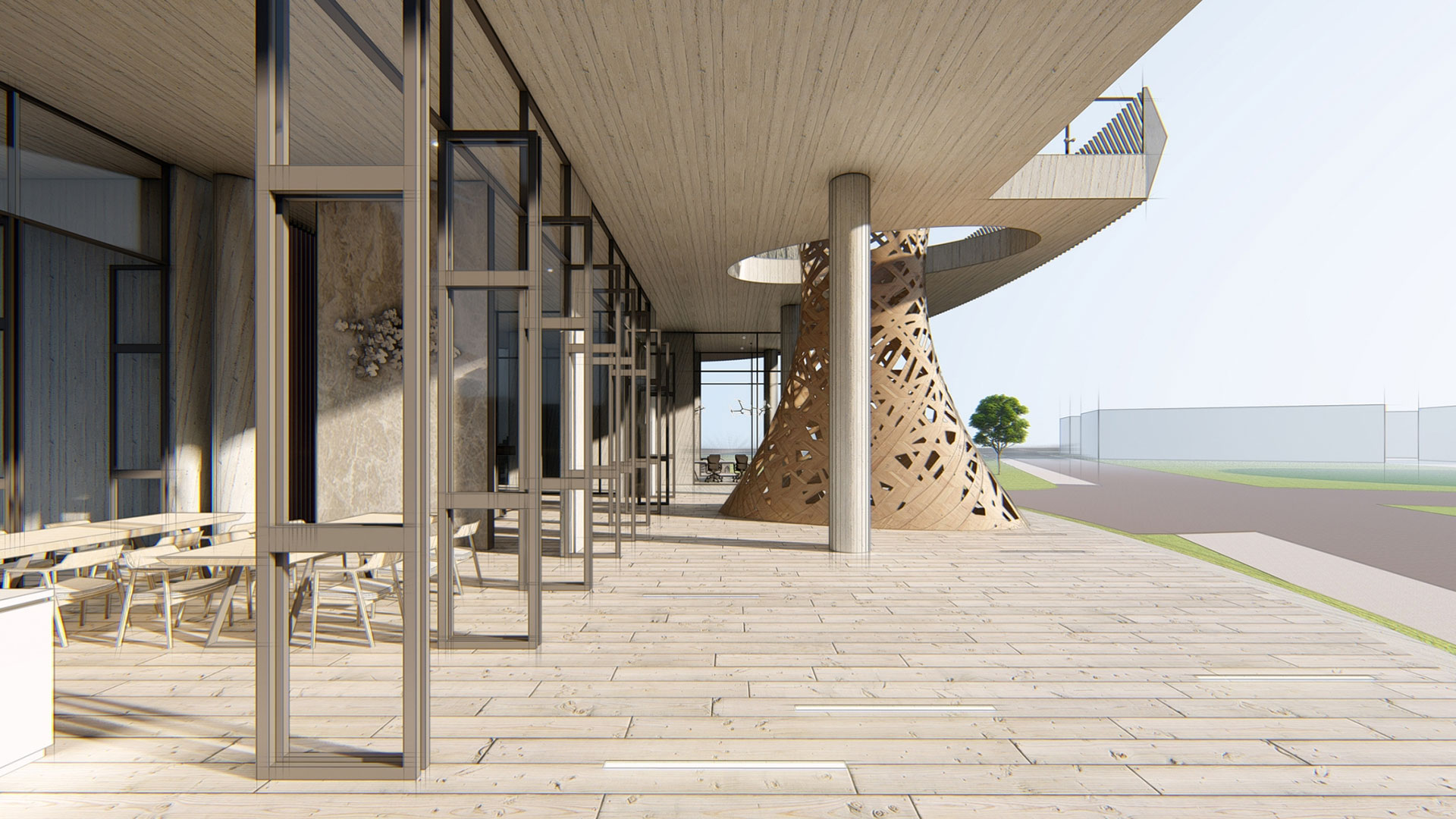
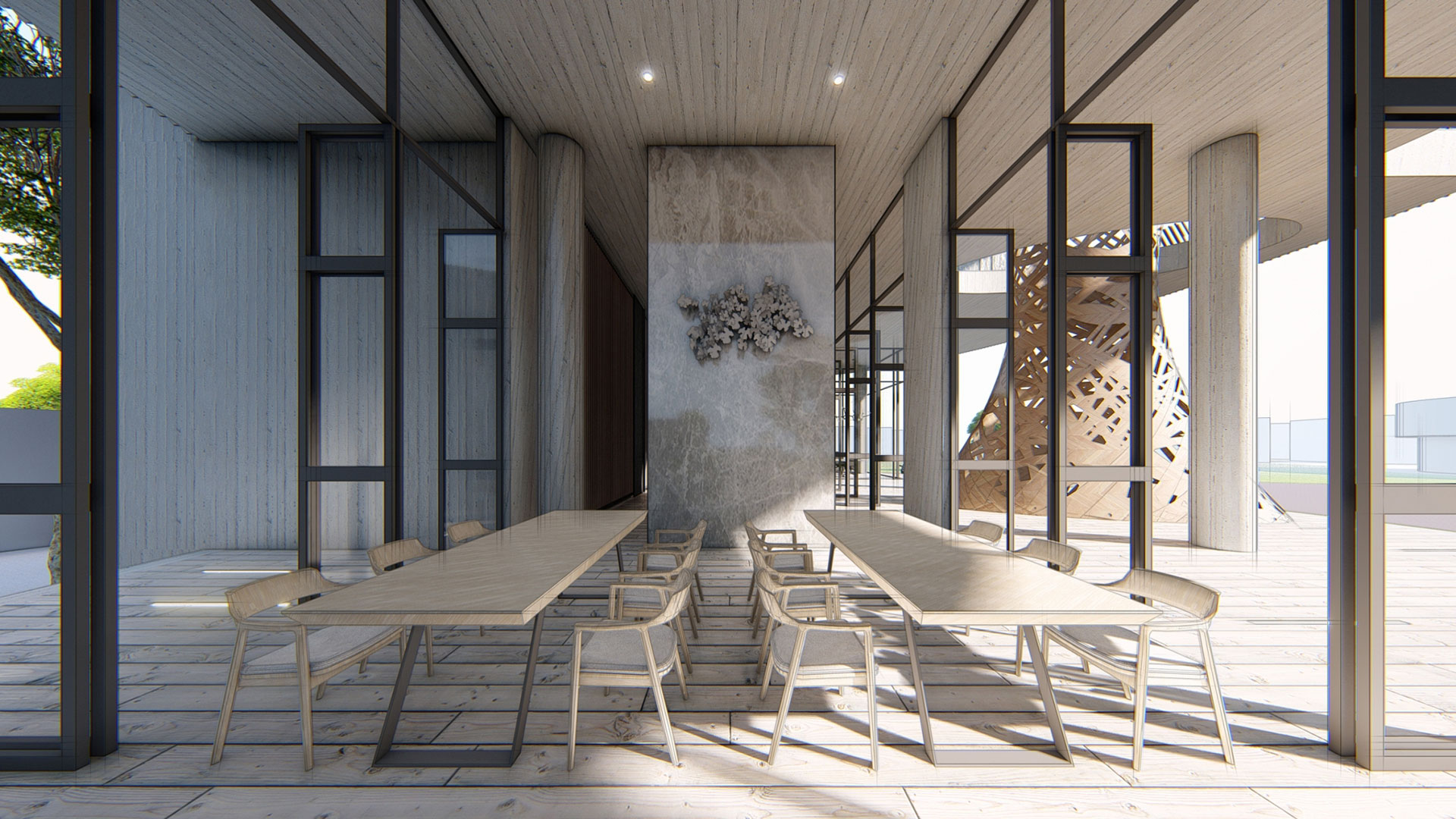
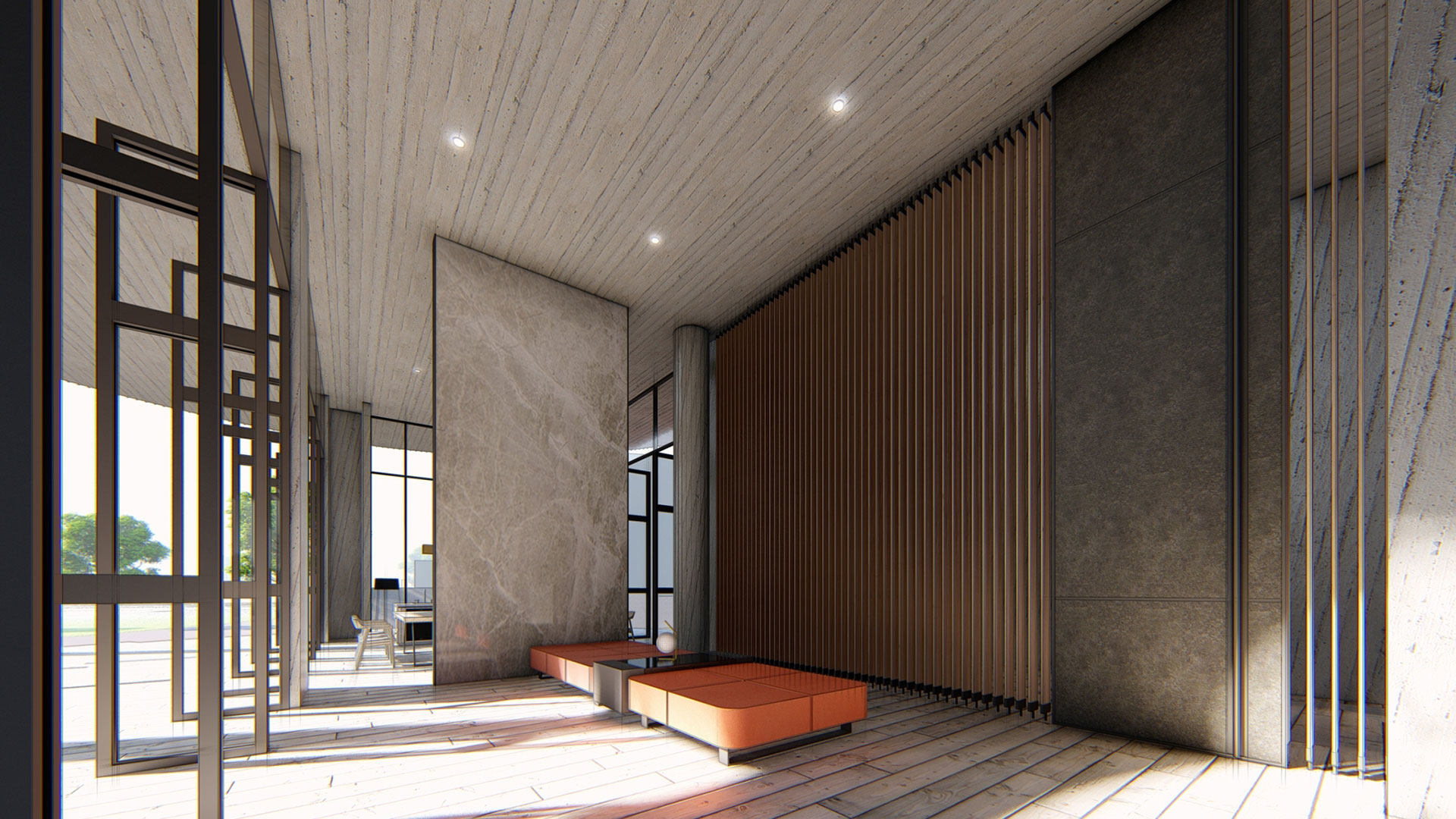
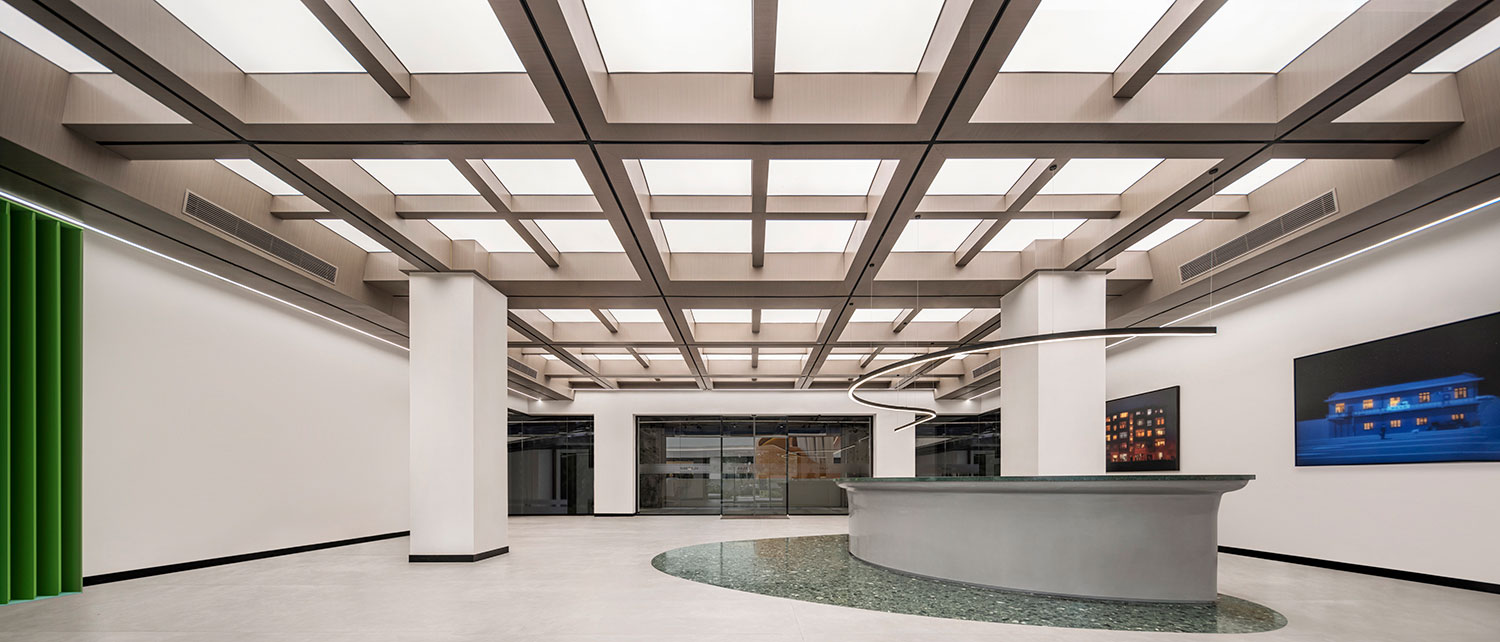
因為本項目為商辦共用之社區型態,規劃上設置多個不同進出口進入本建築,企圖讓人在建築與戶外之間四處流動穿梭,造成一種探索之空間體驗模式,每次來這,都是一種全新的空間體驗。從戶外進入到室內,發現有一條半戶外中央生態軸線廊道,以此為識別與聚集,人們在各個空間活動與探索。
Open Campus Design:
As a mixed-use community combining commercial and office functions, the project features multiple entrances and exits, encouraging free flow between the building and outdoor spaces to create an exploratory spatial experience—each visit feels fresh and new. Upon entering from the outdoors, visitors encounter a semi-outdoor central ecological corridor, which acts as a focal point for navigation and gathering, guiding people to explore and engage in activities across various spaces.
中央生態綠軸線:
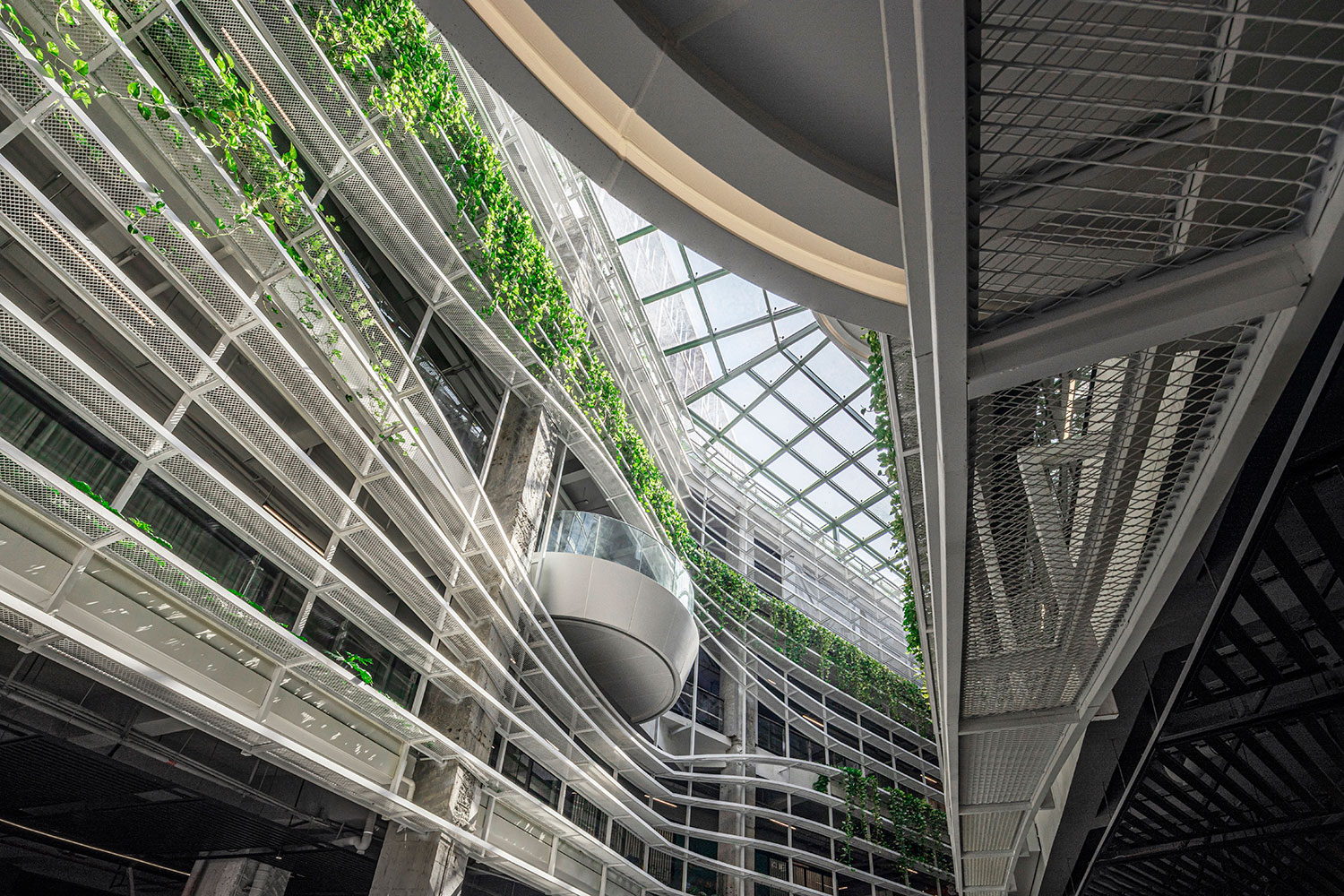
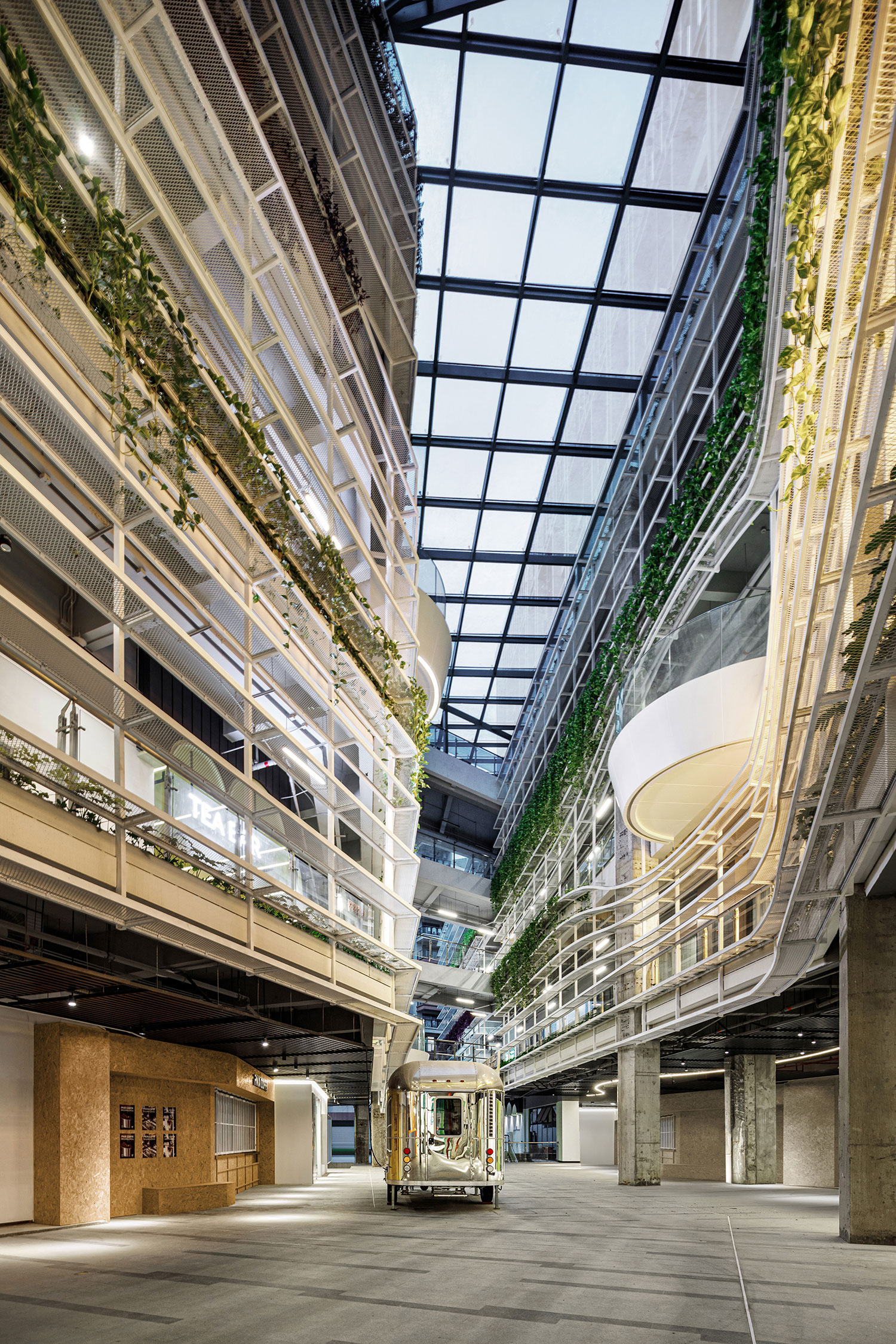
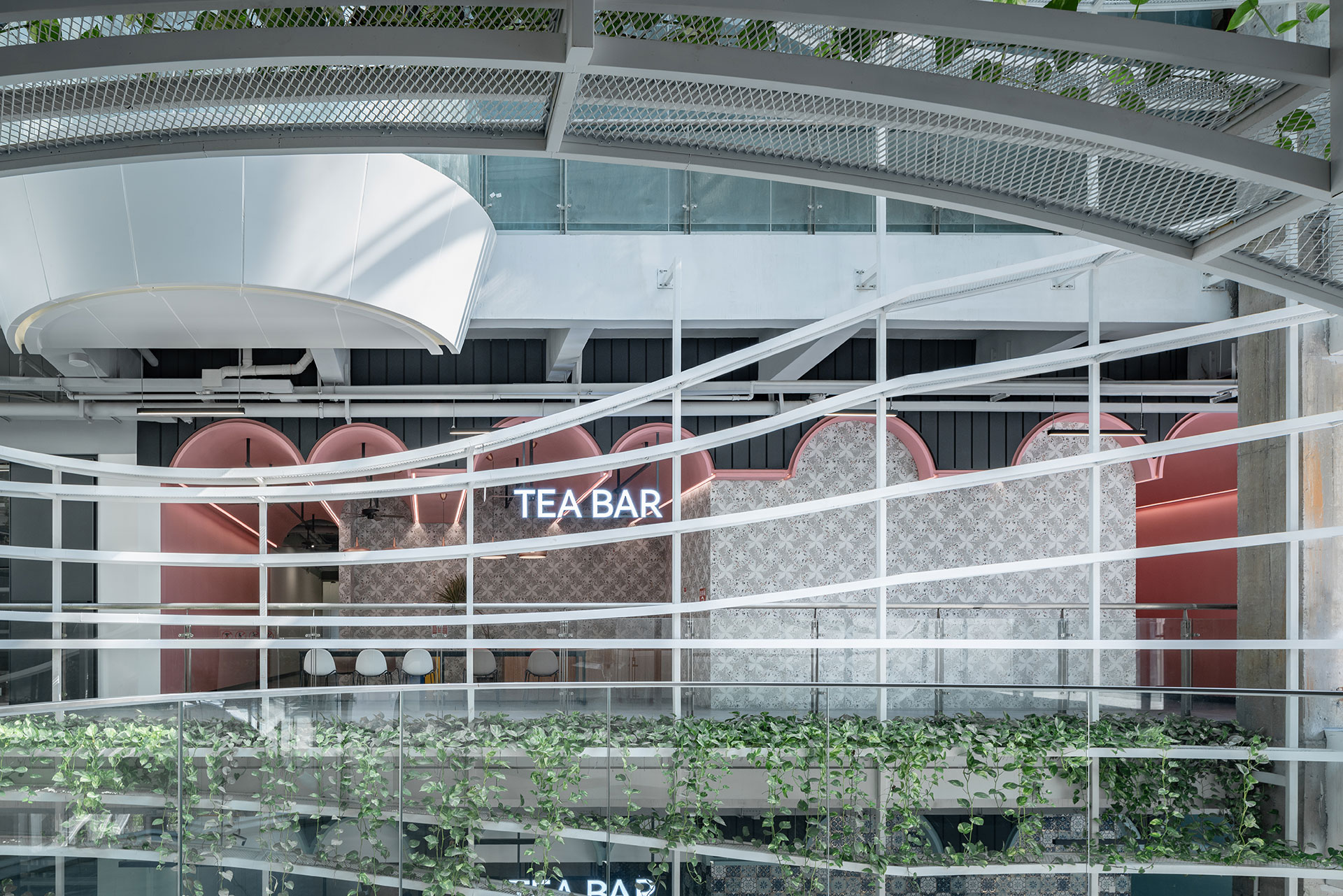
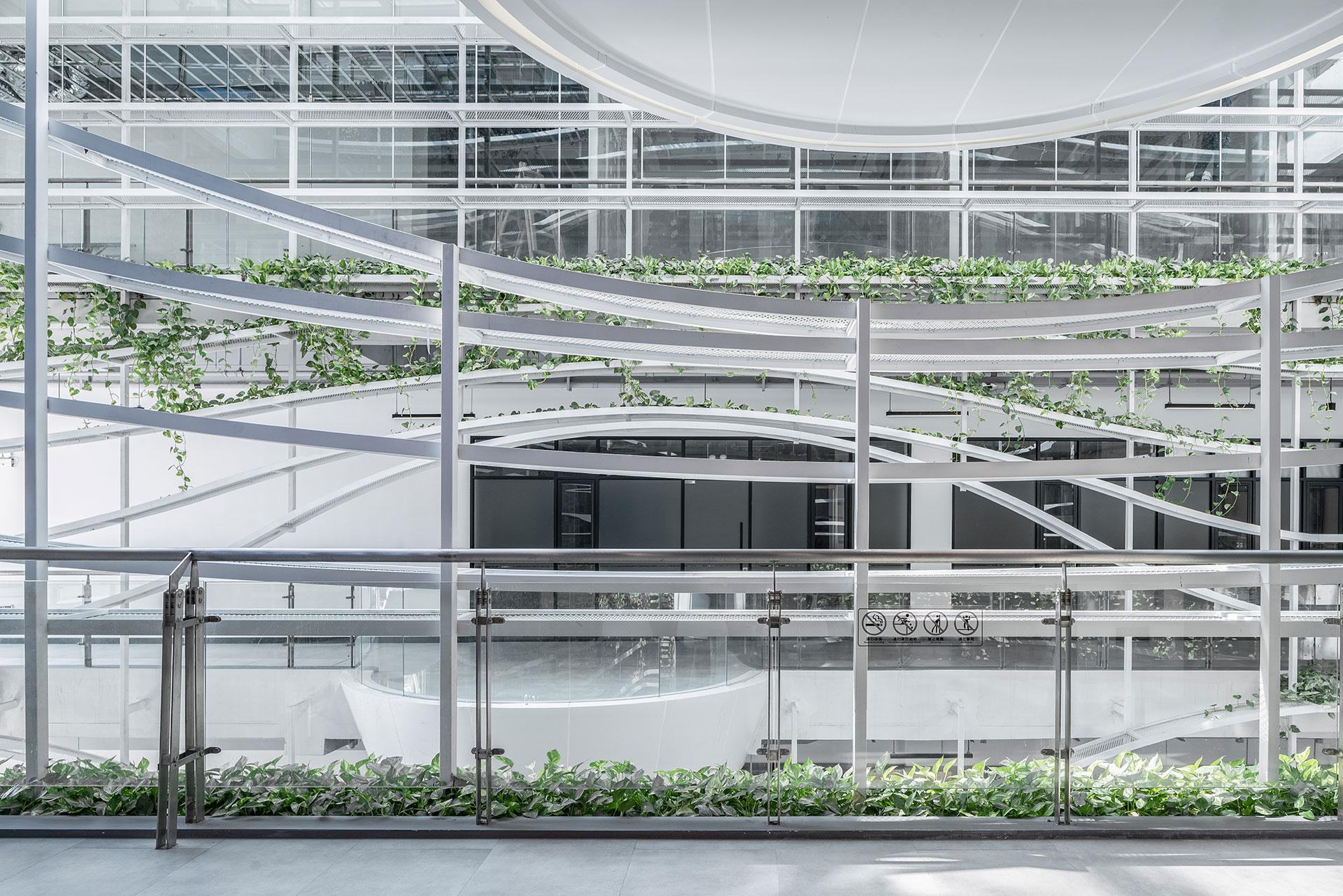
在建築物裙樓的中央軸線上,置換建築表皮引入生態綠牆,人們在此行走時猶如 進入一個綠牆山谷中,每一天的不同時刻,隨著太陽的移動,山壁上綠植的光影亦跟著不斷游移,為山谷裡的氛圍提供了時刻轉換的天然場景。隨著人們來到這山谷的時間不同,春夏秋冬,一年後,五年後,山壁上的綠植亦呈現出不同的生長樣貌,設計上期待塑造一可持續發展之生態環境,稱之為【活著的建築】。
整個建築的裙樓樓層,透過中央生態綠軸線的挑空置入,各式商業與辦公活動交織成一種生活場景的共用社區表情,如同人們在山谷裡匯聚一般,同時也為社區注入了最重要的永續生態環境。
Central Ecological Green Axis:
Along the central axis of the building’s podium, the original facade is replaced with an ecological green wall. Walking through this area feels like stepping into a "green wall valley." Throughout the day, as the sun moves, the light and shadows cast by the plants on the wall shift continuously, creating a dynamically changing natural scene. Season after season, year after year, the vegetation on the wall evolves and matures, embodying the design’s vision of a sustainable ecological environment—dubbed "Architecture That Lives."
By incorporating the double-height central ecological green axis into the podium floors, various commercial and office activities interweave to form a shared community atmosphere, as if people gathering in a valley. This axis also injects a vital sustainable ecological environment into the community.
活動的垂直串聯:
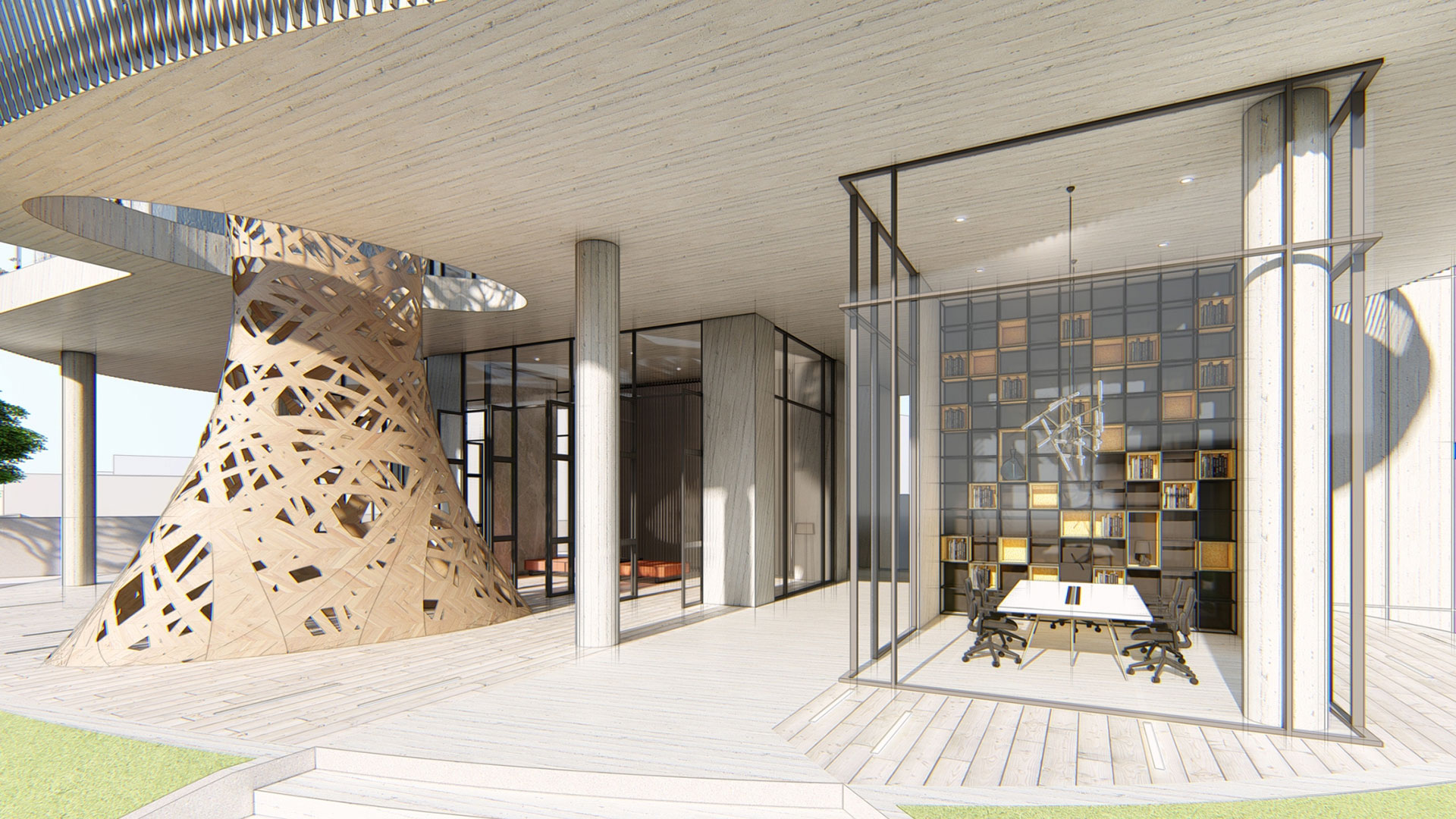
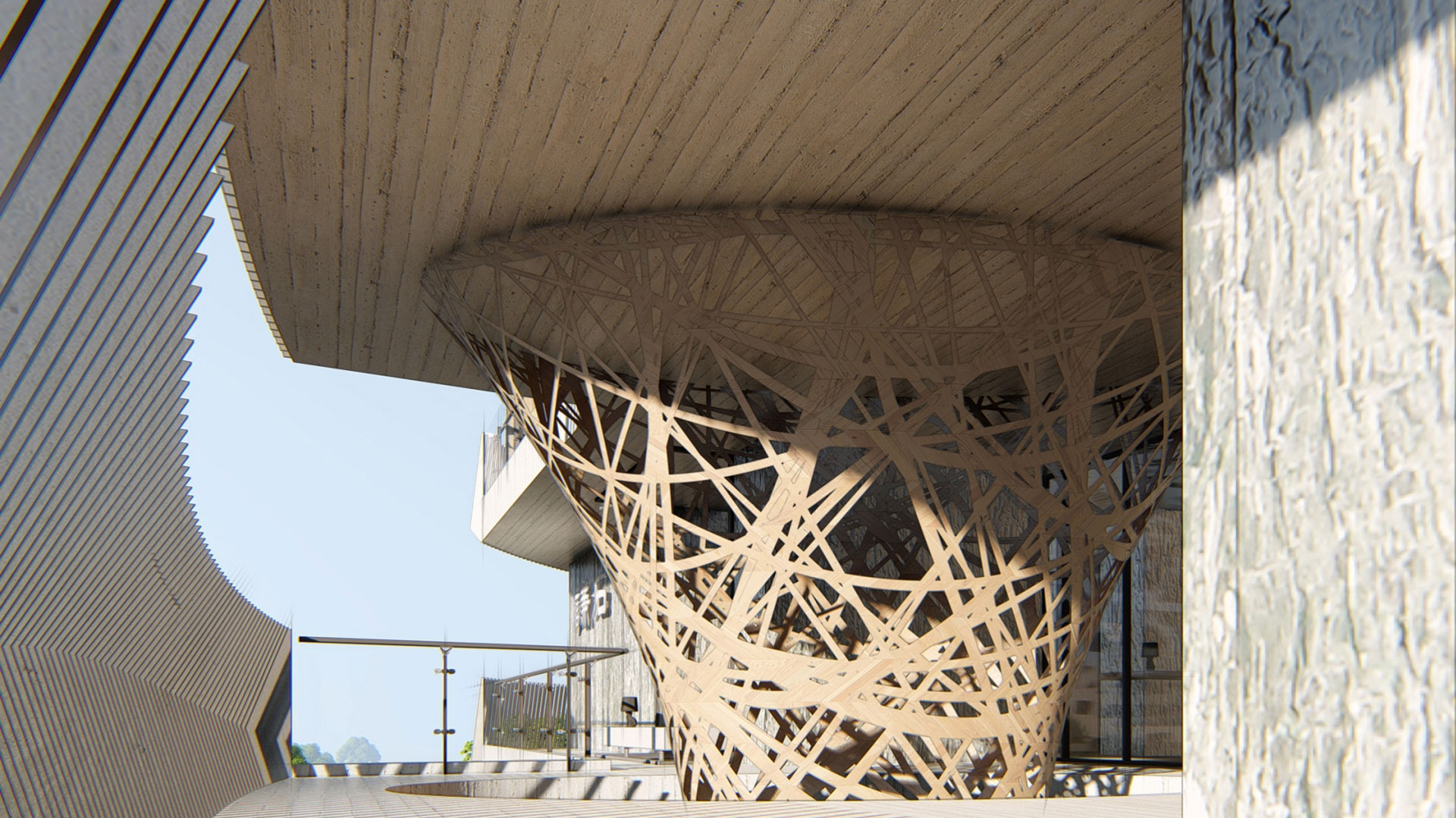
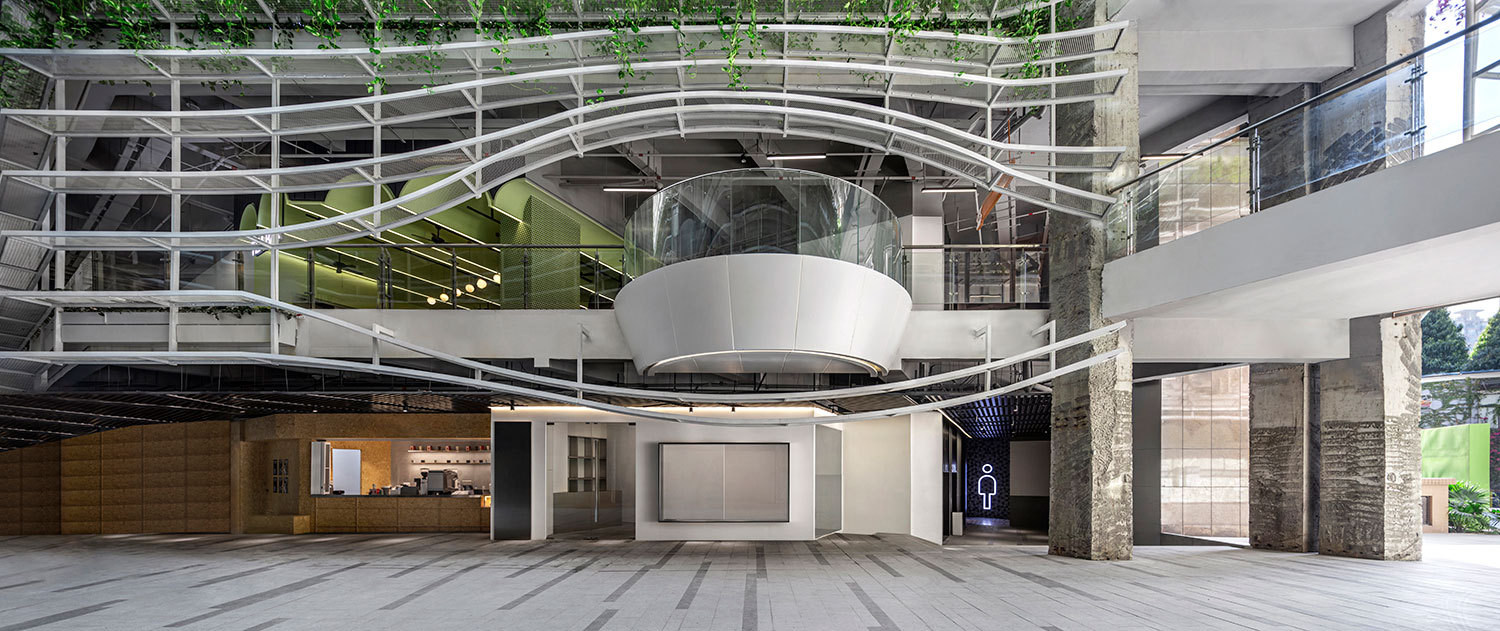
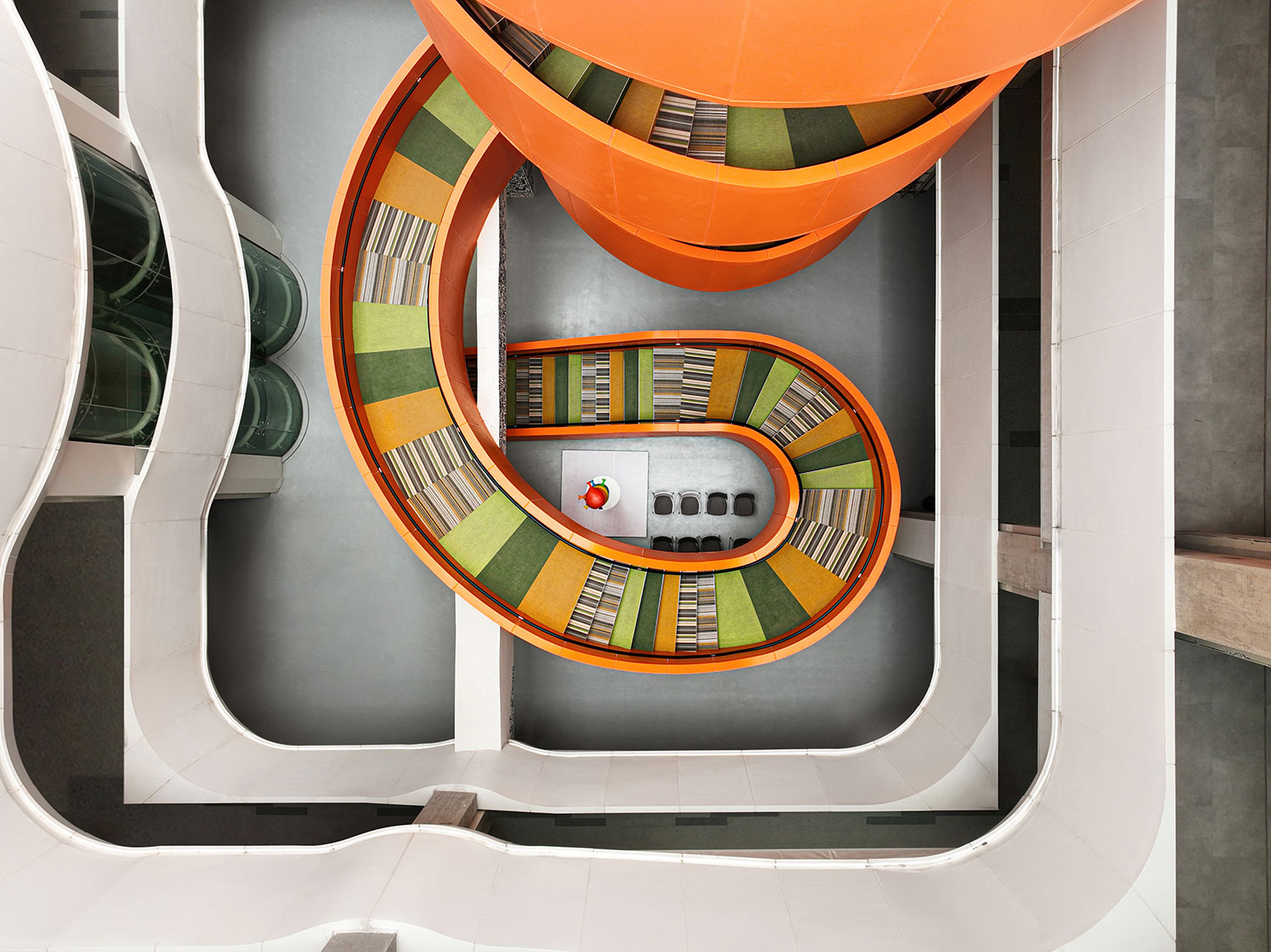
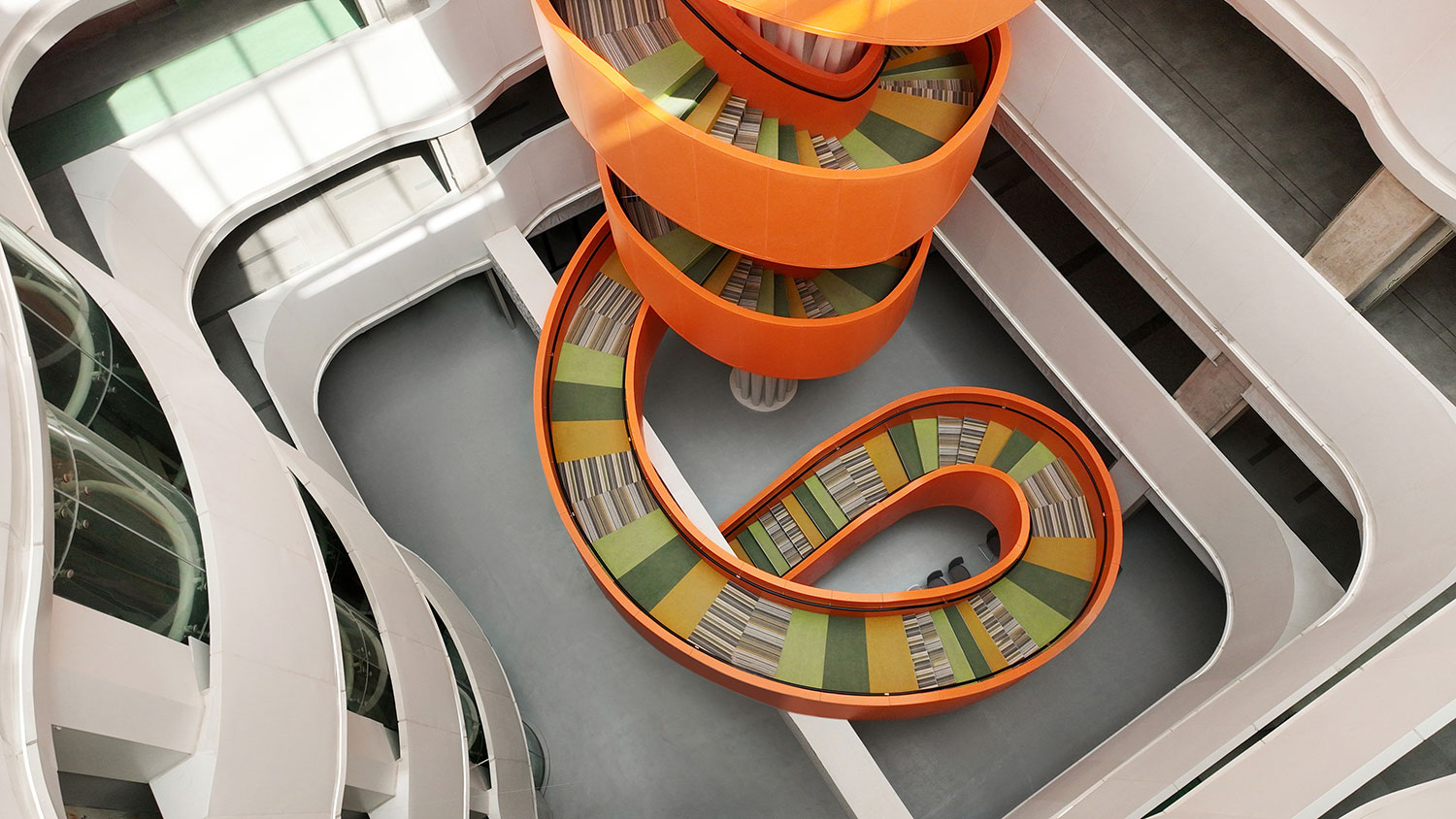
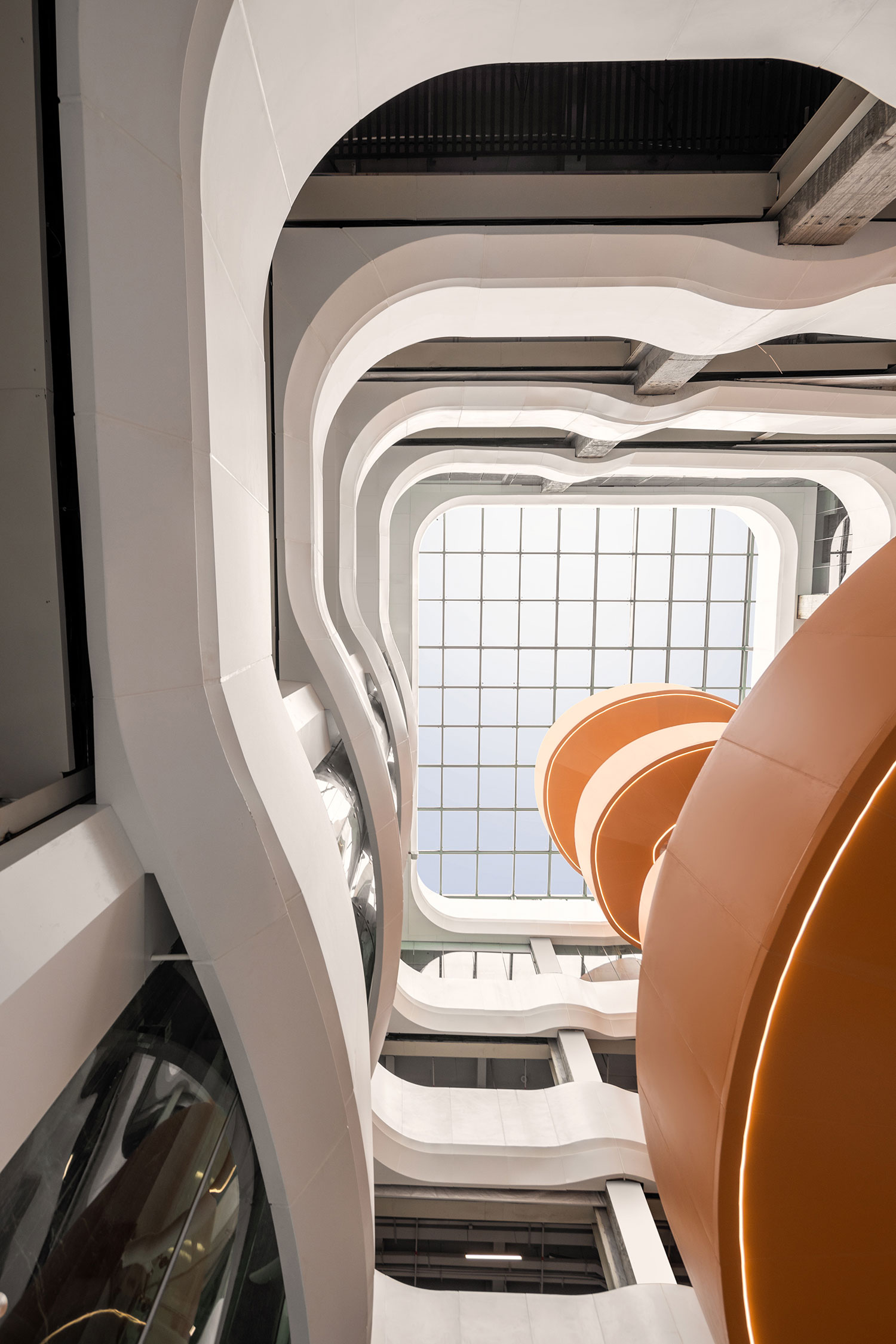
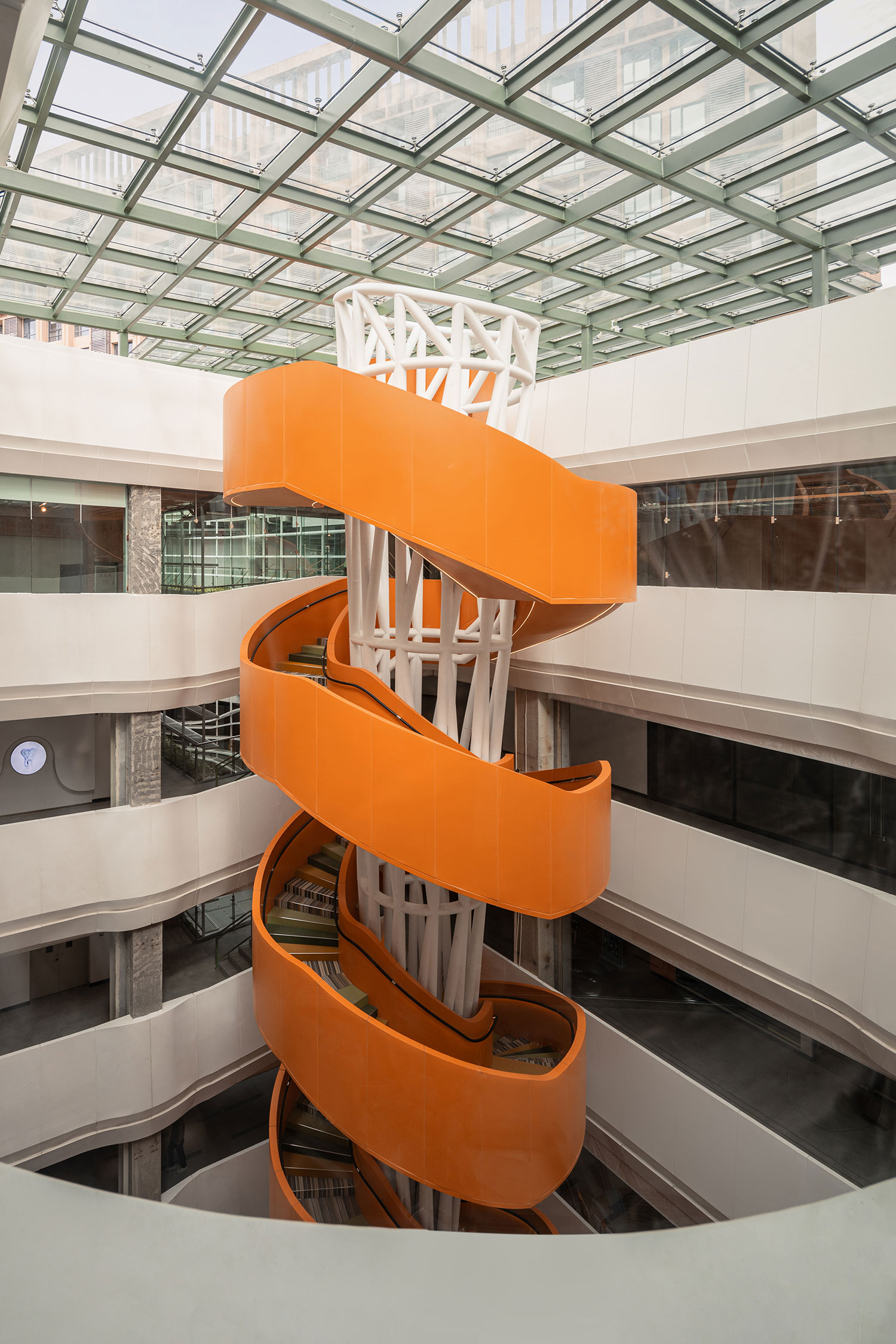
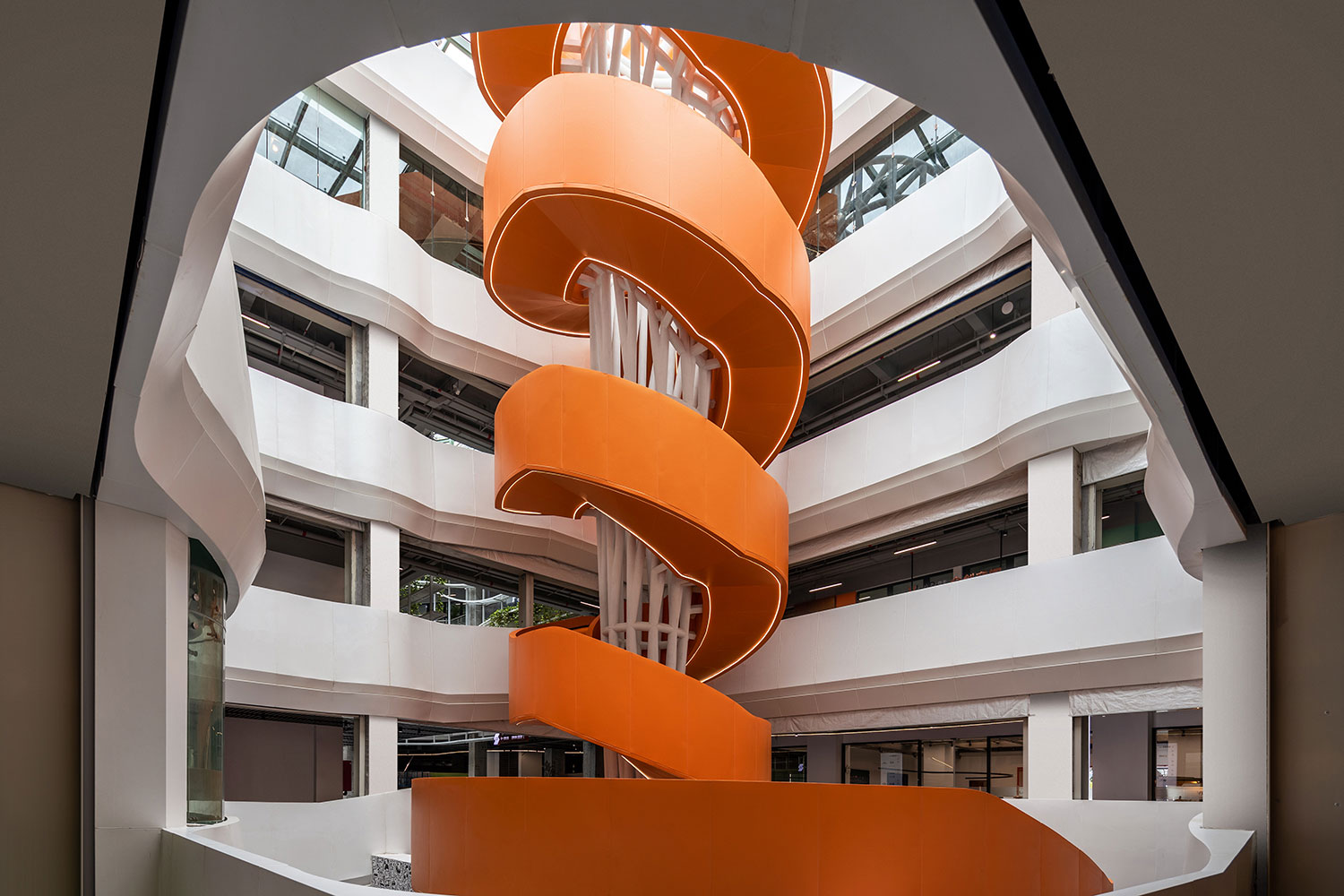
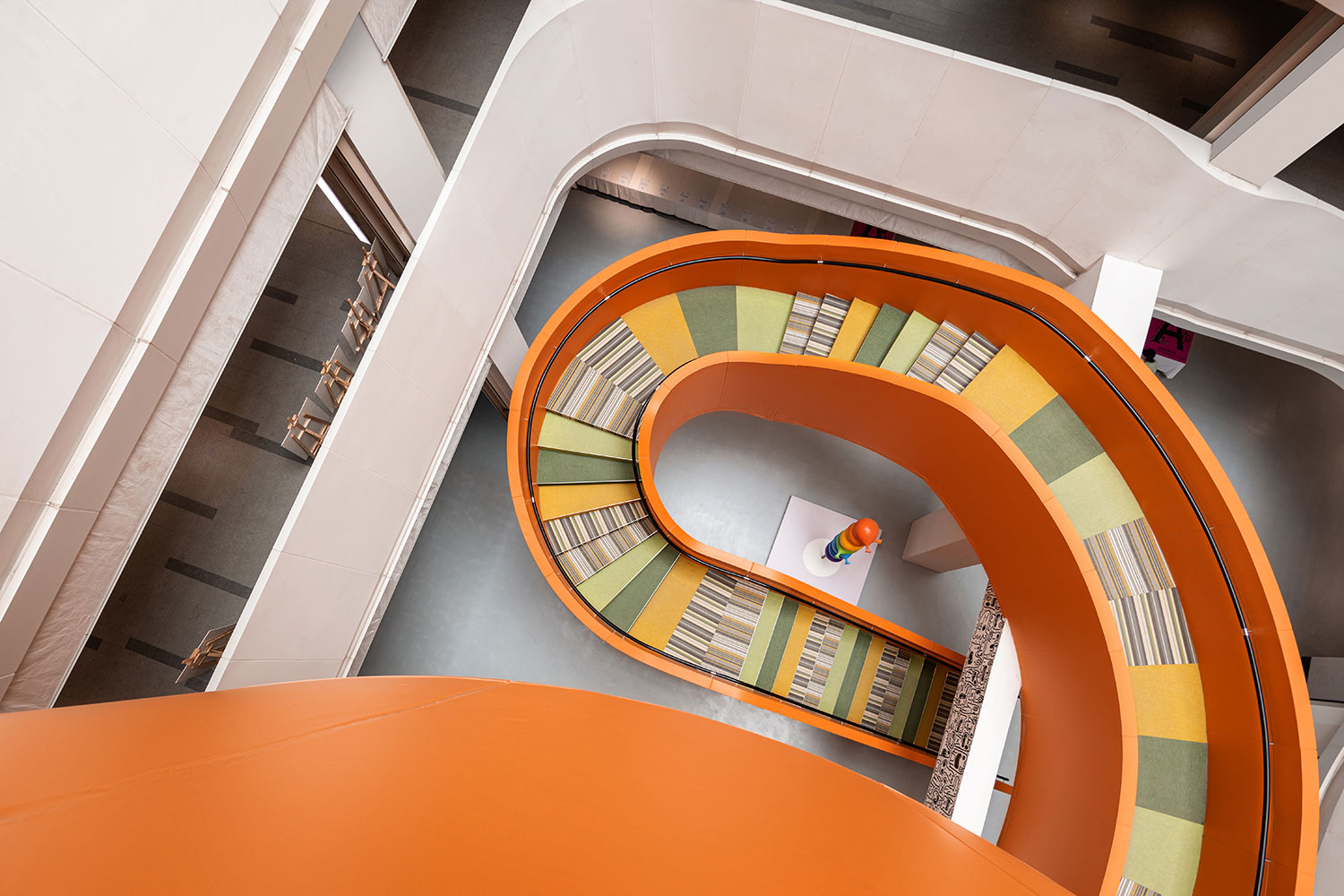
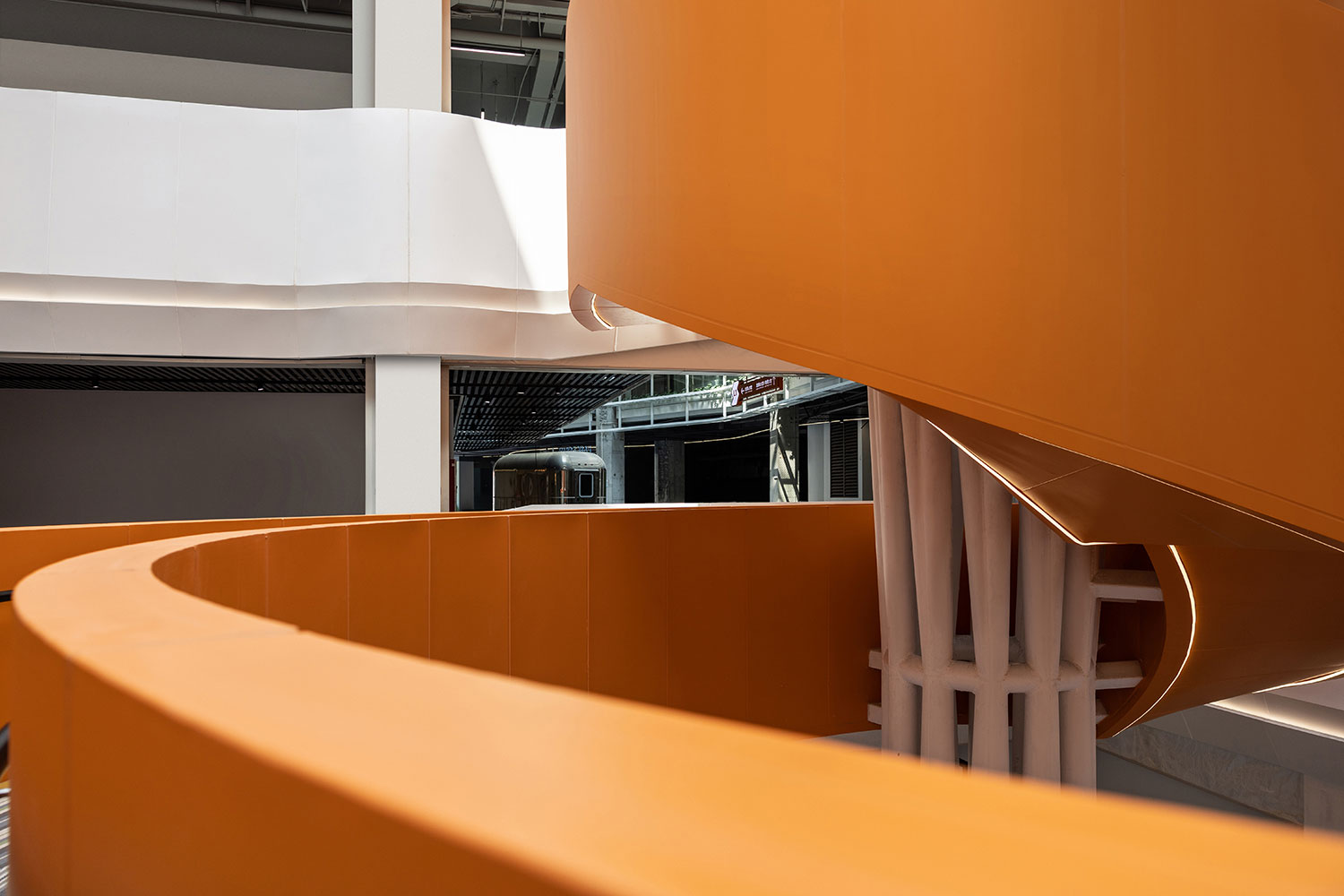
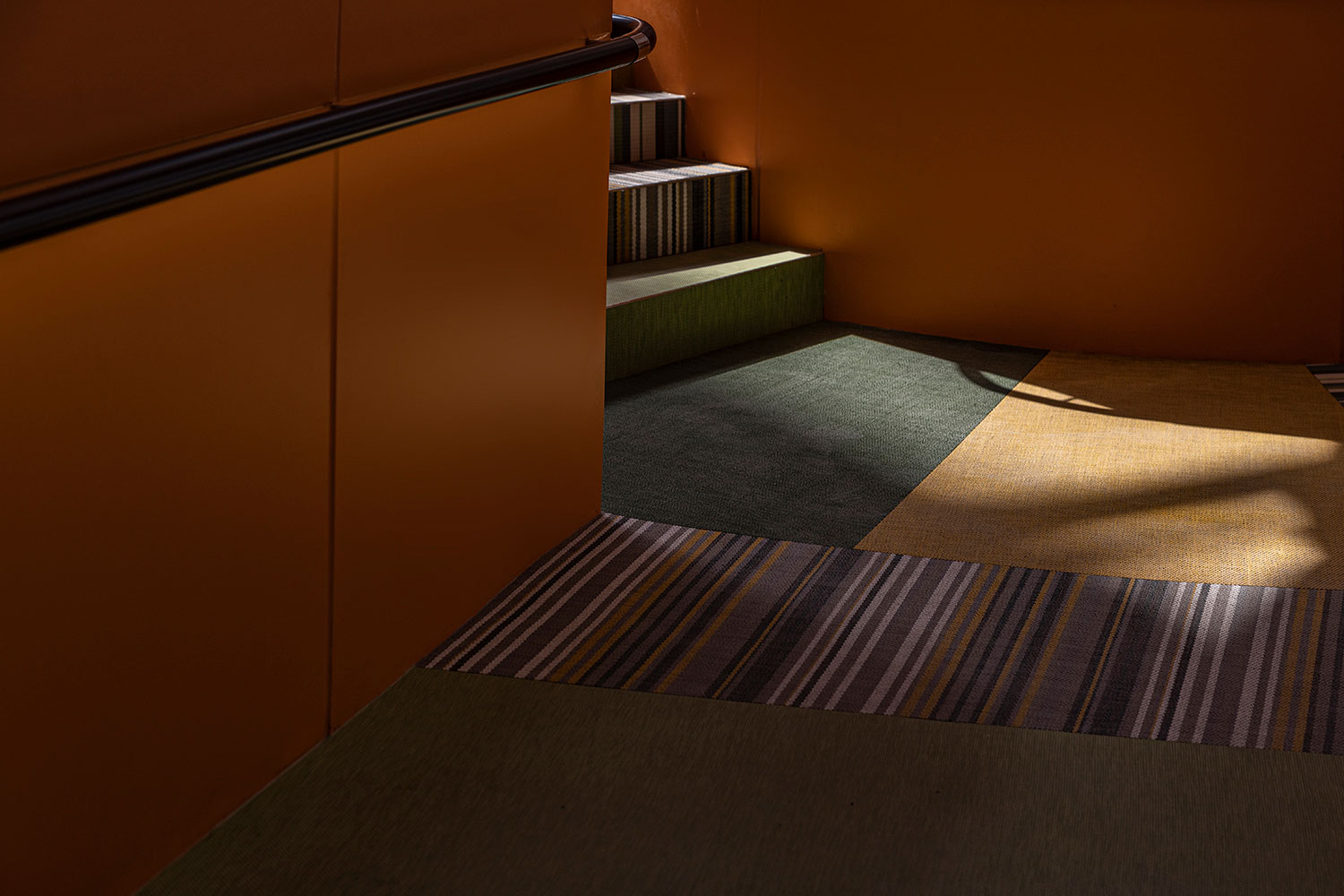
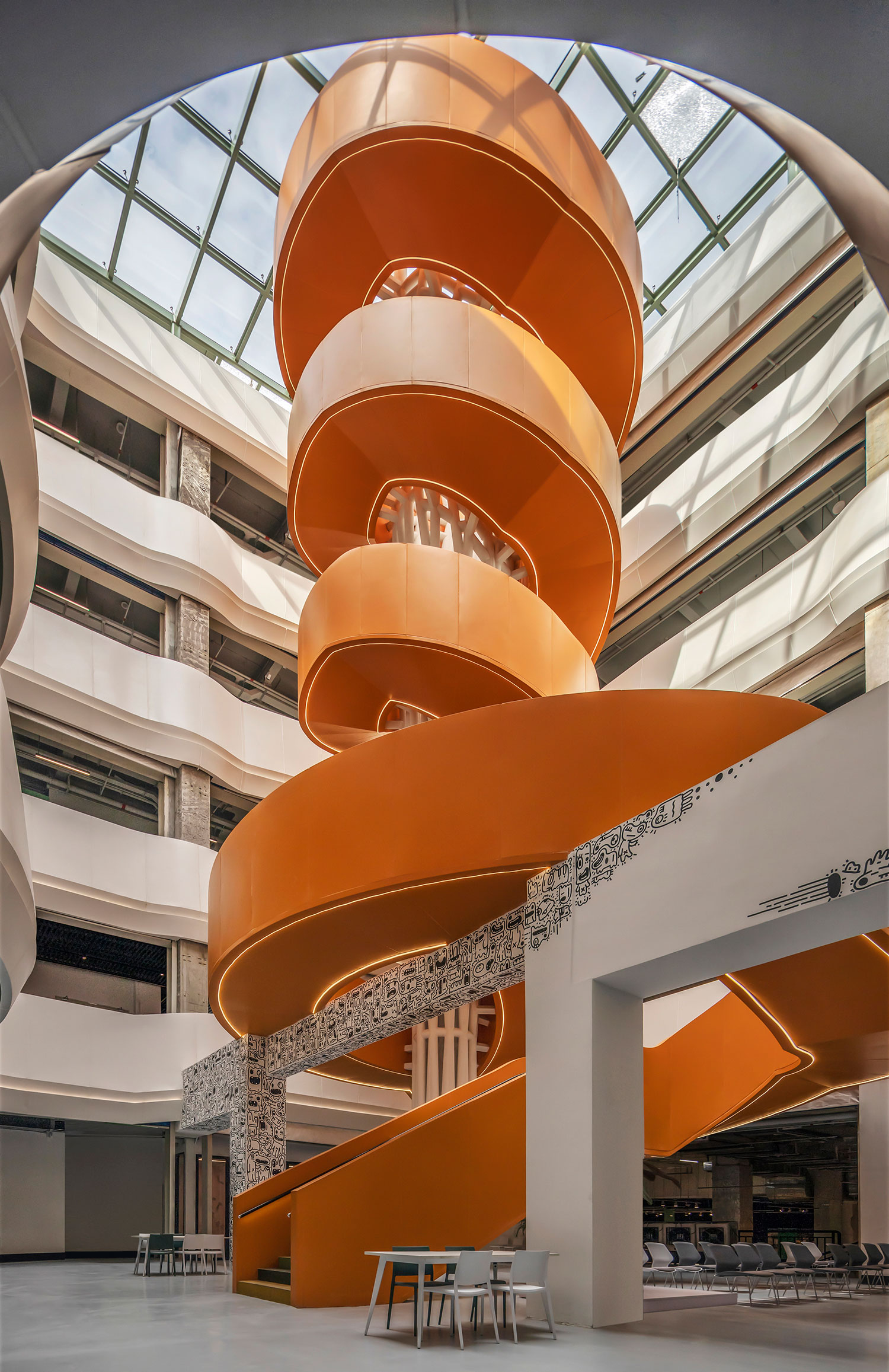
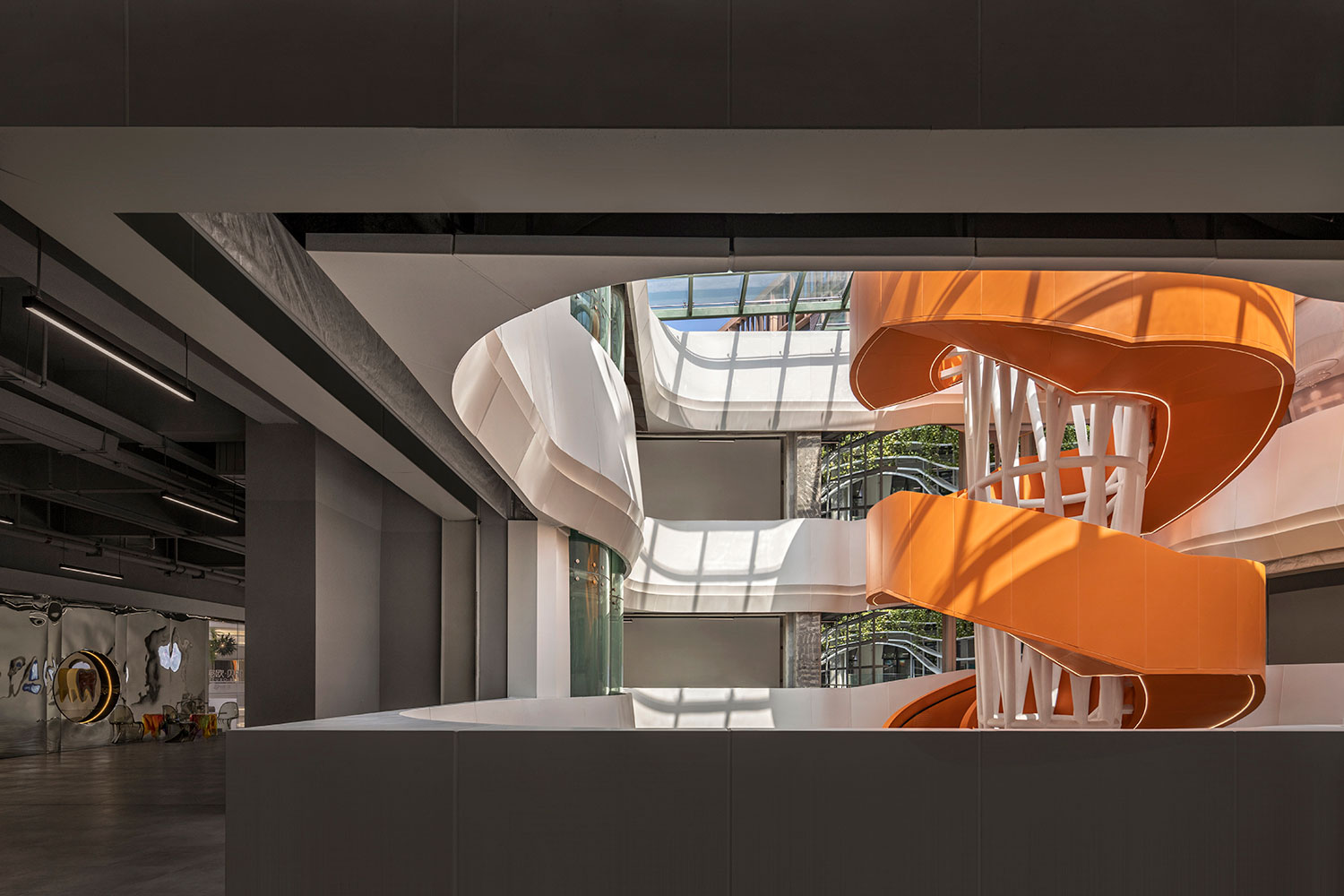
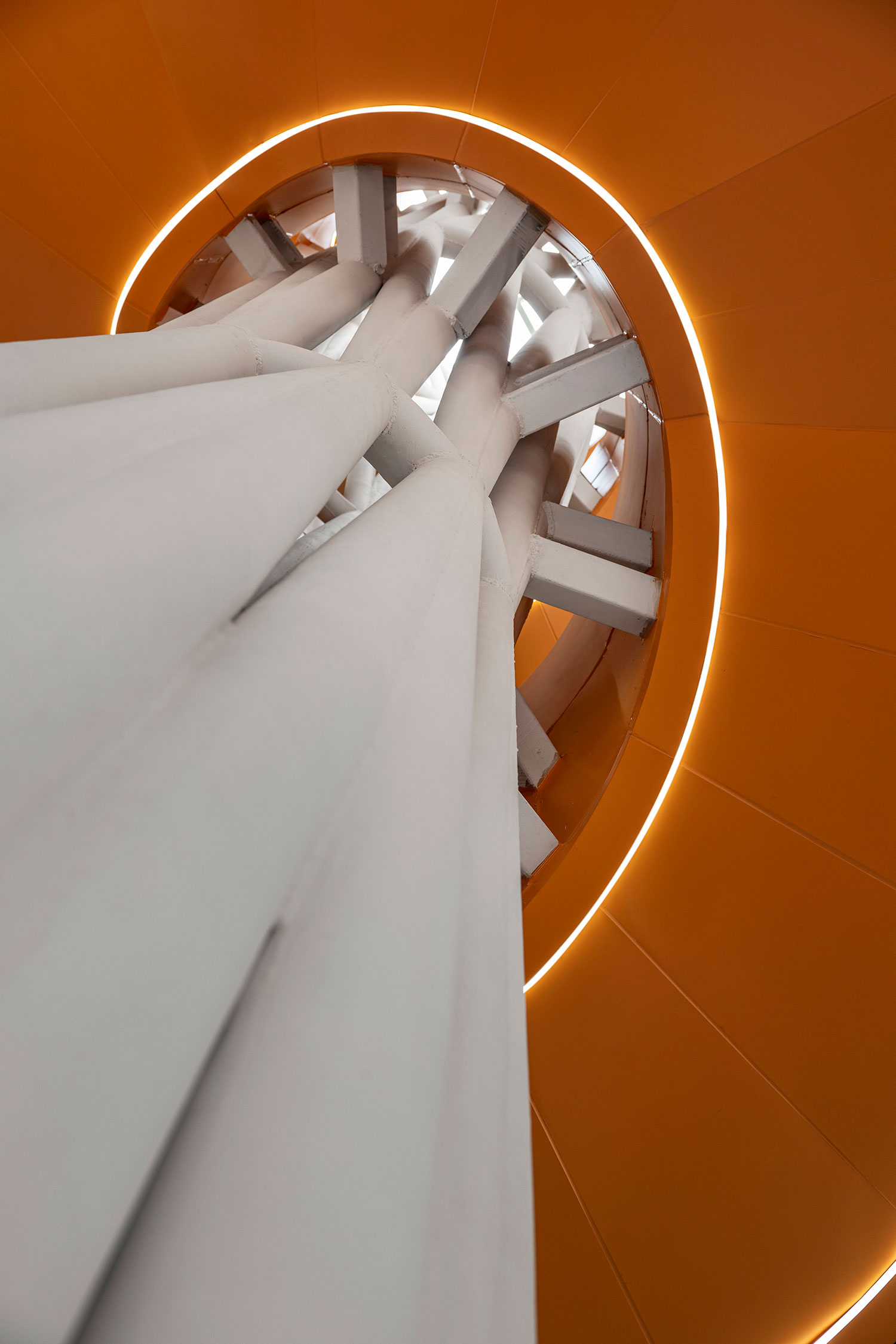
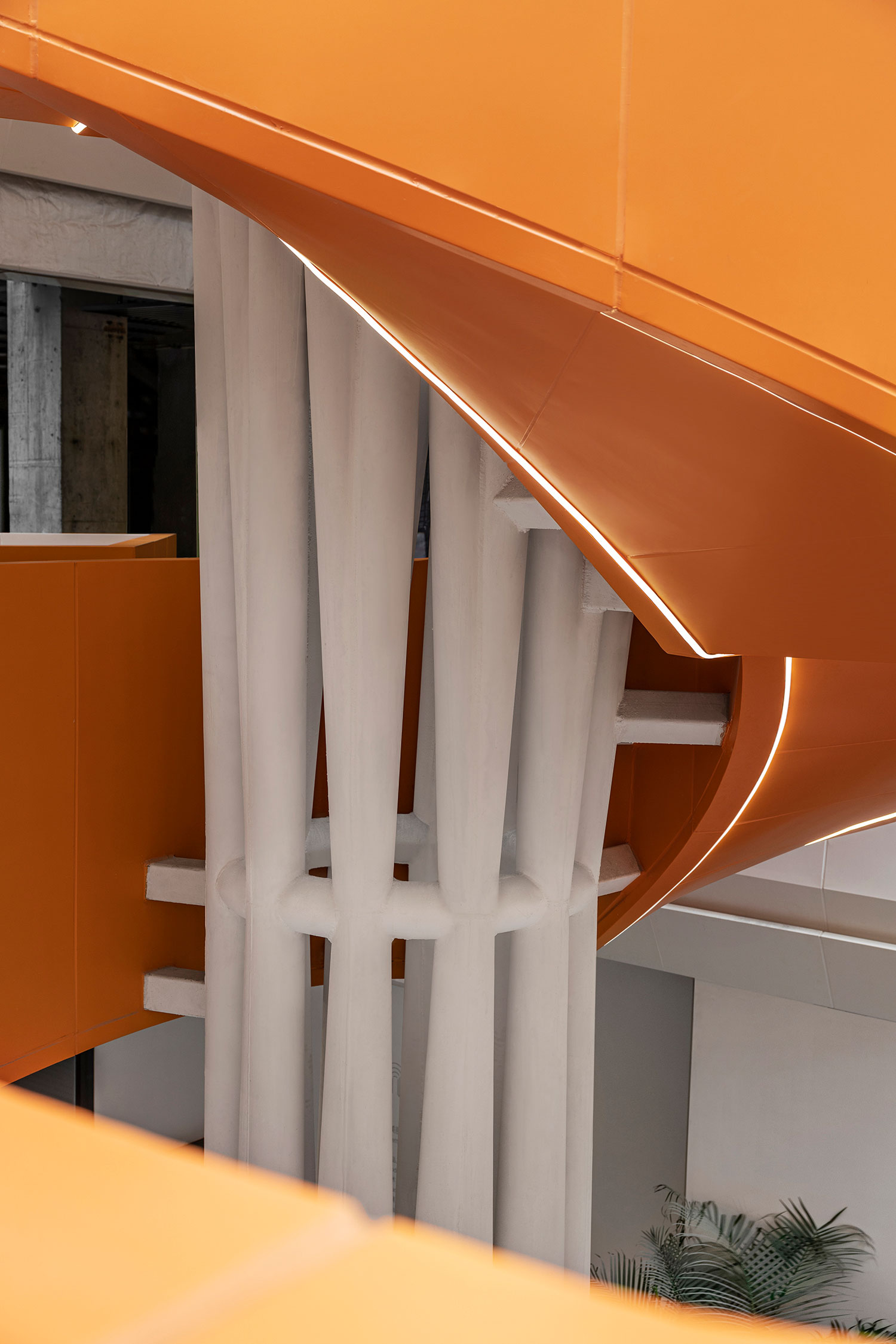
在南北向的中央生態軸線與串連東西向入口軸線交會處,設計利用原建築既有從負一層至四層之垂直挑空,設置一特殊造型之圓形樓梯。該樓梯的時尚造型在一層二條主要動線的交匯處顯得十分搶眼,目的在於將進入一層的人流吸引至裙樓其他的各個樓層,增強空間的垂直串聯,放大裙樓各樓層的商業效應,人們不僅可在一層各動線隨意探索,更能透過此圓形樓梯自然穿梭於各個樓層增強了本項目的商業活動體量。
Vertical Connection of Activities:
At the intersection of the north-south central ecological axis and the east-west entrance axis, a uniquely designed circular staircase is installed within the existing double-height space spanning from B1 to the 4th floor. The staircase’s stylish design stands out prominently at the junction of the two main ground-floor circulation routes, aiming to attract foot traffic from the ground floor to other podium levels. This enhances vertical spatial connectivity, amplifies the commercial vitality of each podium floor, and encourages people to freely explore not only the ground floor but also move seamlessly between floors—significantly boosting the project’s commercial activity volume.
寫於最後:
城市更新項目是一種特別有意義、有溫度的項目類型,項目從都市長久荒廢的一角搖身一變成為城市居民工作、生活、消費、參與文化活動之城市聚點,項目落地後的確大大的提升了城市居民的生活內容與城市活動型態,也因為影響範圍極廣,故設計過程需要大量且不斷的檢討各種設計思考所造成未來的使用影響,而不斷堅持的結果最後能見到城市片區的改變與成長,過程眾人的努力絕對是十分值得的。
Concluding Notes:
Urban renewal projects are particularly meaningful and heartfelt endeavors. Transforming a long-abandoned urban corner into a hub for residents’ work, life, consumption, and cultural participation, this project has significantly enriched urban lifestyles and activity patterns. Given its wide-ranging impact, the design process required extensive and ongoing reviews of potential usage implications. However, witnessing the transformation and growth of the urban district as a result of our persistent efforts makes all the hard work truly worthwhile.